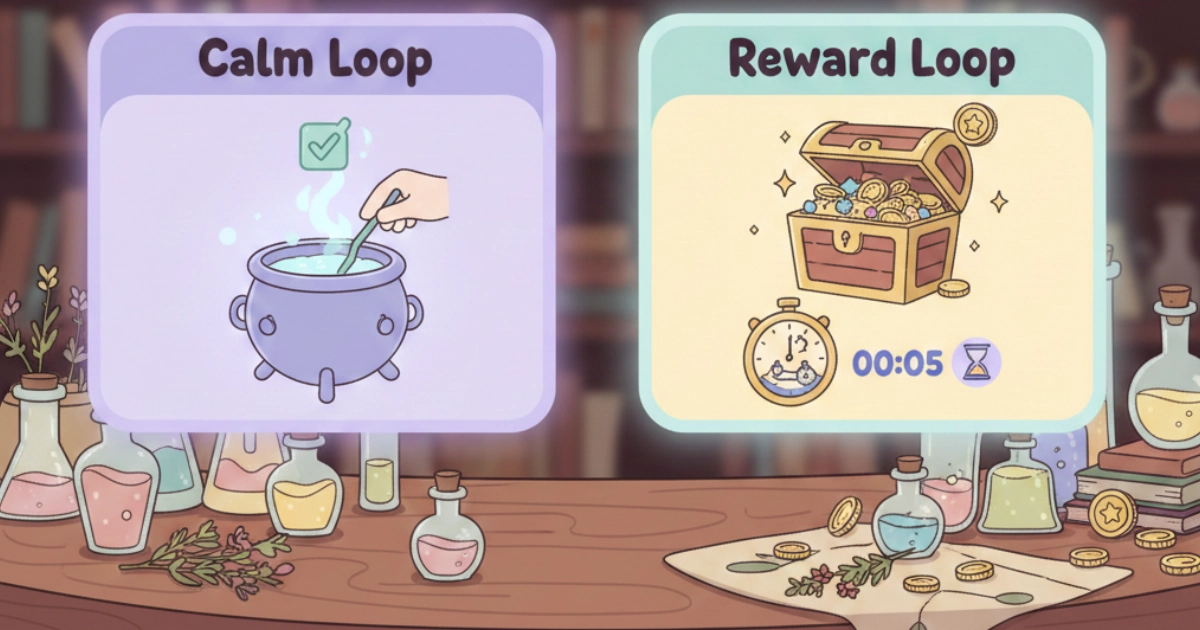
Some game activities feel like a deep breath. You gather a few ingredients, follow a small recipe, and watch something new appear in your hands. That is the quiet magic of crafting therapeutic design: it turns tiny steps into a gentle sense of stability.
In cozy and farming games, crafting is rarely about speed or pressure. It is about rhythm, clarity, and the comfort of “I know what to do next.” When the system is simple, your attention can soften instead of tightening.
This article explores why simple crafting can feel grounding, what it does to the mind, and how designers can keep crafting calming without making it boring.
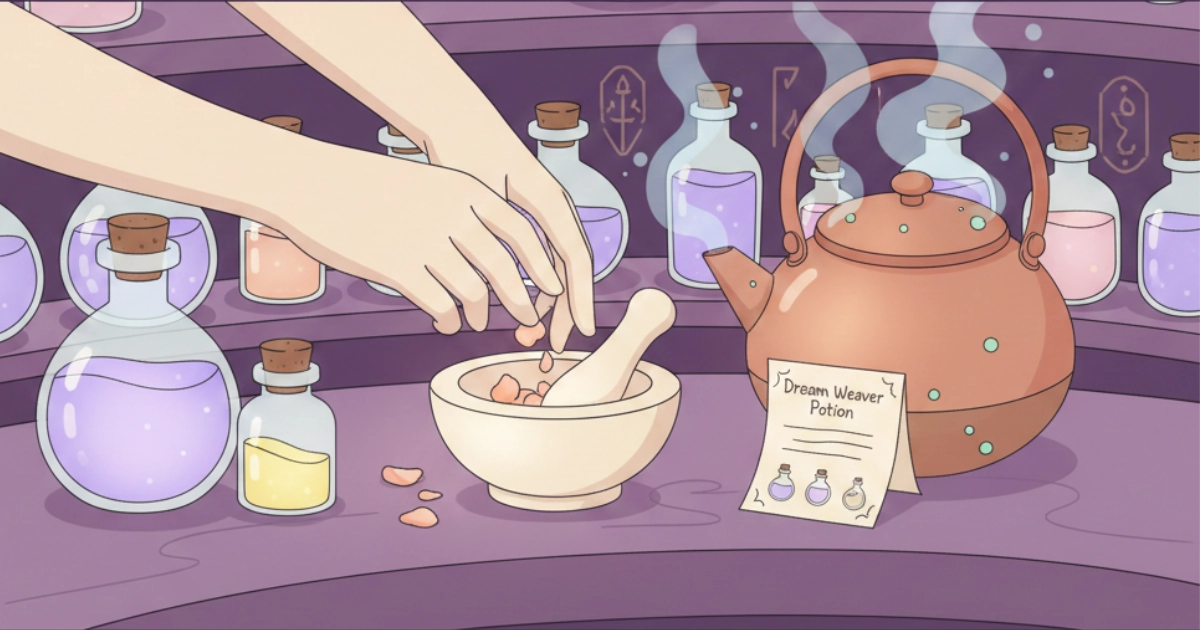
A small recipe can feel like a safe, repeatable ritual.
Table of Contents
1) Why “simple” feels safe to the brain
When a crafting system is easy to understand, your brain spends less effort on uncertainty. You do not need to constantly guess what the game wants from you. Instead, you feel guided, and guidance reduces mental friction.
Clear steps also create a sense of control. Even if your real day feels messy, the crafting loop can feel clean: collect, combine, create. That order can be quietly soothing, especially in relaxing games designed for comfort.
2) Crafting therapeutic loops and the power of small wins
Simple crafting often gives frequent, gentle rewards. Each crafted item is a small completion: a finished potion, a cooked meal, a repaired tool. Those “small wins” matter because they turn effort into visible progress.
This is one reason crafting can feel grounding in slow media. The outcome is not abstract. You can see it, store it, sell it, or gift it. The result becomes a calm proof that your time mattered.
In Potion Game, this is tied to a familiar cozy loop: receive an NPC request, gather ingredients, craft, deliver, then get feedback and upgrades.
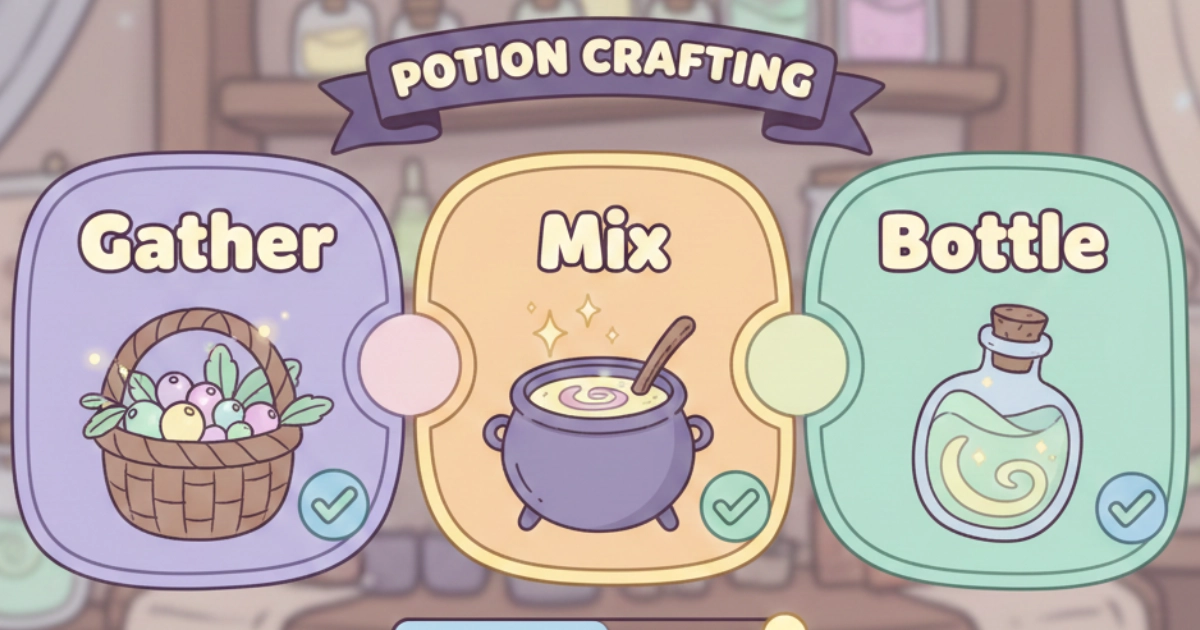
Clear steps make progress feel calm and reachable.
3) The “ritual effect”: repetition without boredom
Rituals are repetitive, but they do not feel empty. They feel meaningful because the repetition creates familiarity. In games, a simple crafting routine can become a personal rhythm: the same motions, the same order, the same gentle payoff.
That rhythm can be especially helpful for players seeking digital calm. When the loop is predictable, your attention can settle. You are not bracing for sudden surprises. You are participating in a steady, cozy pattern.
Many crafting systems also feel tactile, even on a screen. When actions map to intuitive gestures (drag, stir, pour), the process can feel embodied rather than purely mental. Potion Game’s design leans into this “hands-on” feeling by centering touch gestures across preparation and mixing steps.
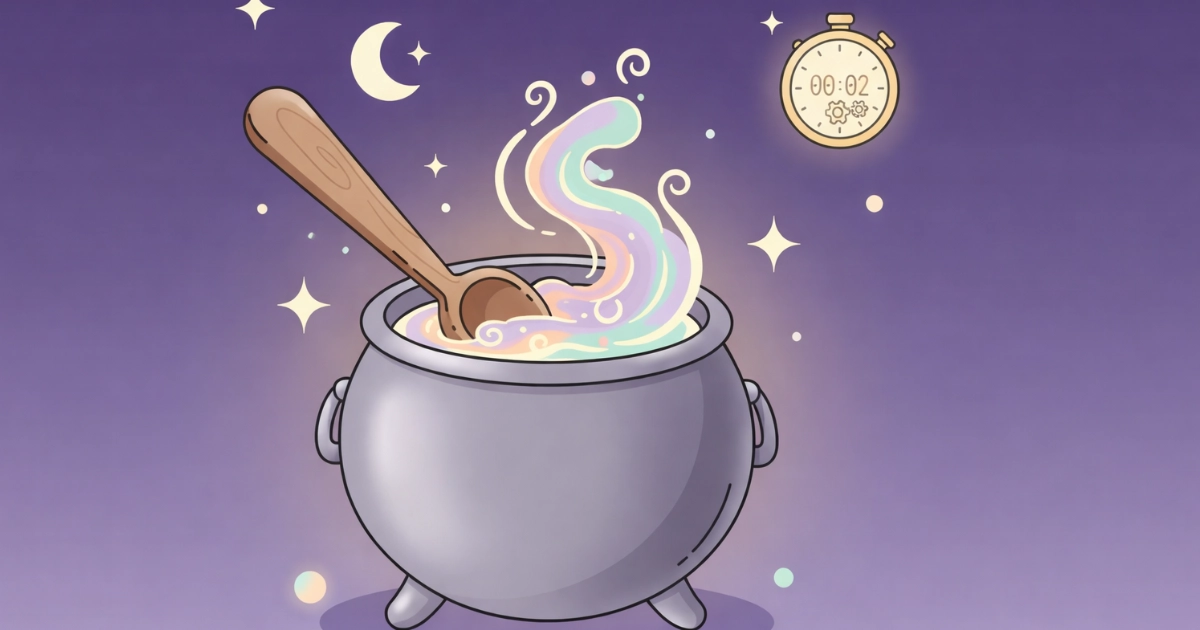
Repetition can feel like a lullaby when it is gentle and clear.
4) Why low-stress crafting reduces decision fatigue
Some games overwhelm players with endless options, complex trees, and dozens of materials. That depth can be fun, but it can also create decision fatigue: your brain gets tired of choosing.
Simple crafting reduces that burden. Fewer ingredients, fewer steps, and clearer outcomes mean fewer mental switches. Instead of wrestling with a system, you flow through it. That is a key reason cozy games for stress often favor crafting that is easy to re-enter after a short break.
If you are exploring calm design more broadly, you may also like our article about gentle interfaces and visual comfort: Why Low-Contrast Interfaces Reduce Visual Stress.
5) How to design crafting therapeutic systems without making them shallow
The goal is not to remove meaning. The goal is to remove unnecessary strain. A crafting system can be simple and still feel rich if it supports personal choice, light mastery, and cozy expression.
Here are a few ways simple crafting can stay calming while still feeling meaningful:
- Keep the rhythm small: a short sequence of actions that always feels familiar and easy to follow.
- Let mastery be gentle: doing something “a little better” feels rewarding, without fear of failure.
- Use kind feedback: soft sounds, warm motion, and clear outcomes that reassure instead of judge.
- Offer light variety: small seasonal changes or subtle twists that spark curiosity without confusion.
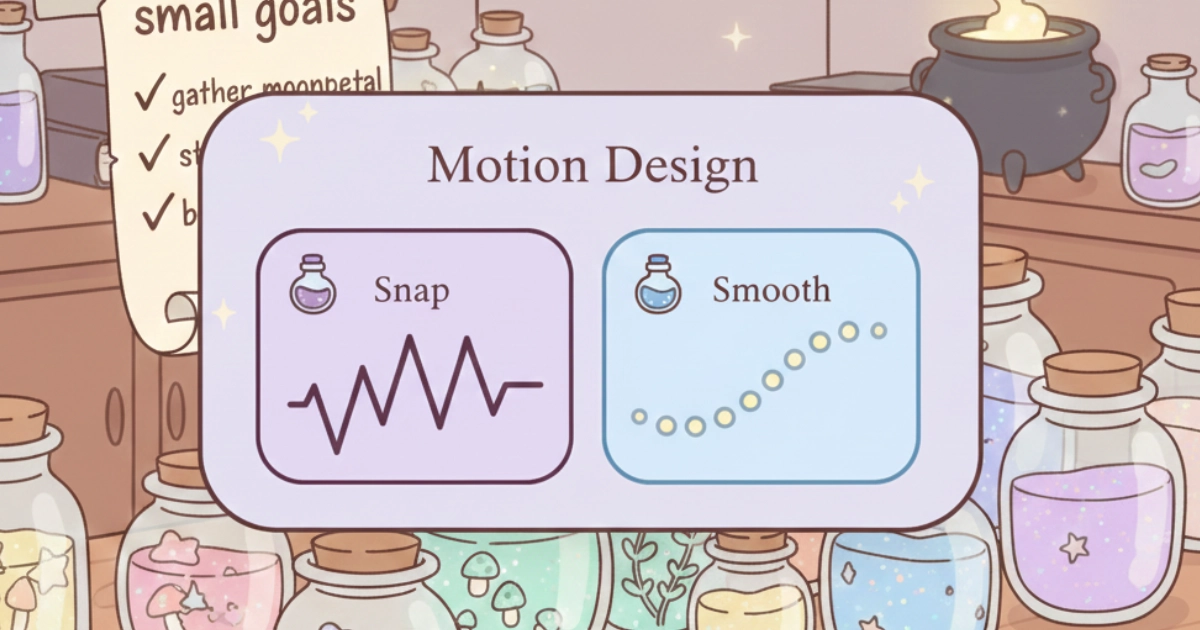
- Protect the mood: avoid time pressure or signals that create urgency or tension.
- Connect actions to care: crafting that helps others, decorates a space, or expresses personality.
For a simple, trustworthy introduction to how stress works and why gentle activities can help the body settle, you can explore the World Health Organization’s overview of stress: WHO stress resource.
If you are curious about how mental effort builds up — and how clarity and simplicity can reduce it — Nielsen Norman Group offers a clear, human-centered explanation here: cognitive load in UX.
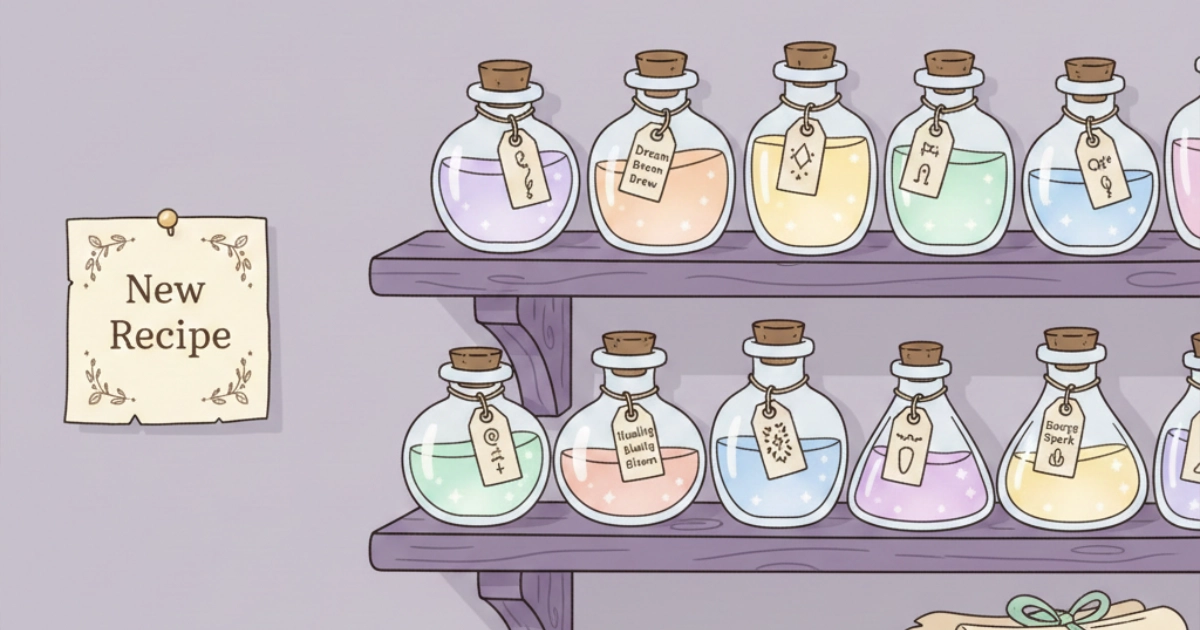
When progress is visible, your mind can rest.
Final Thoughts
Simple crafting systems feel therapeutic because they offer clarity, gentle rhythm, and small meaningful wins. They create a calm space where attention can settle, hands can “do,” and progress can feel steady instead of stressful.
If you enjoy cozy crafting and want more design insights, explore our guide on what makes calm games feel comforting: What Makes a Game Cozy? The 7 Core Elements of Calm Design. And if you want to experience a crafting loop built for softness and ritual, join the Potion Game waitlist for updates and early access.
Want to be part of a new cozy alchemy adventure?
Join the Potion Game waitlist 💛