Game loops are like tiny promises your brain learns to trust. You take an action, something responds, and your body reacts emotionally. That reaction might feel exciting, relieving, comforting, or gently reassuring.
This is why calm loops psychology matters. Not every loop exists to push you forward or keep you chasing rewards. Some loops are designed to help your nervous system slow down, by making progress feel safe, predictable, and emotionally light.
In this article, we’ll explore the difference between calm loops and reward loops, and how each one shapes stress, attention, and motivation in cozy games—and in everyday digital habits.
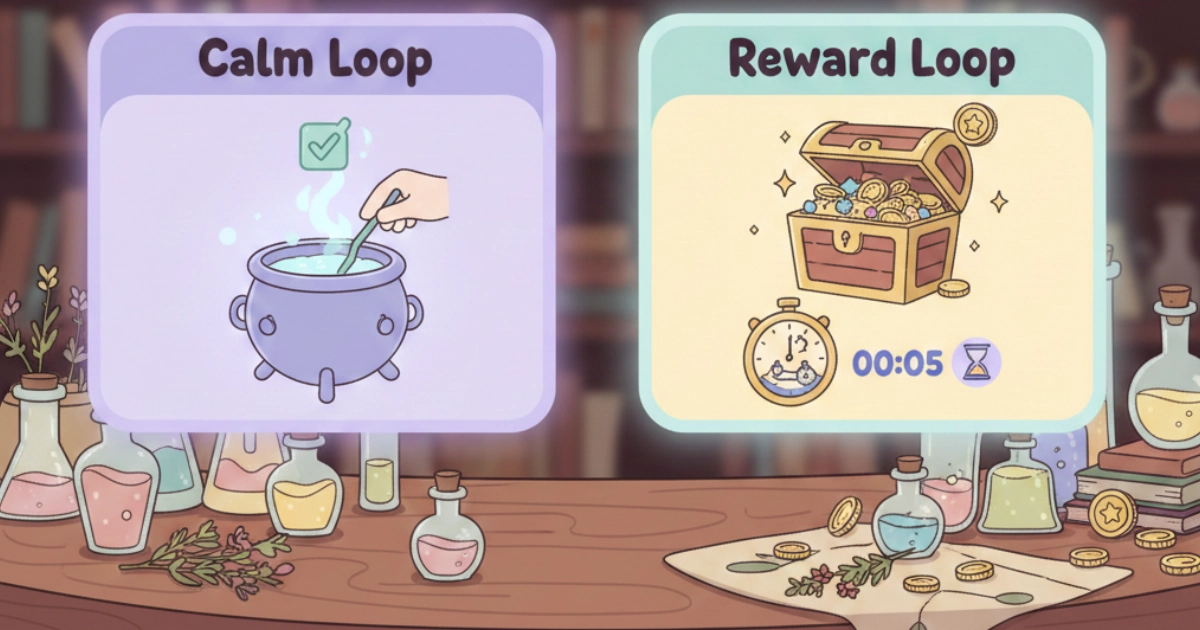
Two loops, two emotional climates.
Table of Contents
1) What a “loop” does inside your mind
A loop is a repeated pattern: you do something, the game responds, and you decide what to do next. Over time, your brain learns what usually follows.
This learning shapes expectation. If the next step feels safe and familiar, your body can relax into it. If the next step feels uncertain or demanding, your attention stays alert. Loops quietly train your nervous system on what kind of emotional state to expect.
2) Reward loops: excitement, anticipation, and subtle pressure
Reward loops are built around motivation. You complete an action and receive something tangible: points, coins, items, progress bars, or visual celebrations. Your brain marks that action as “worth repeating.”
Often, the strongest part of a reward loop is not the reward itself, but the anticipation before it arrives. Variable rewards, streaks, or time-limited bonuses can keep attention in a seeking state—pleasant, but also slightly tense.
Used gently, reward loops feel satisfying and purposeful. Used heavily, they can introduce urgency, fear of missing out, and a feeling that you should always be doing a little more. Over time, this can turn play into background pressure instead of rest.
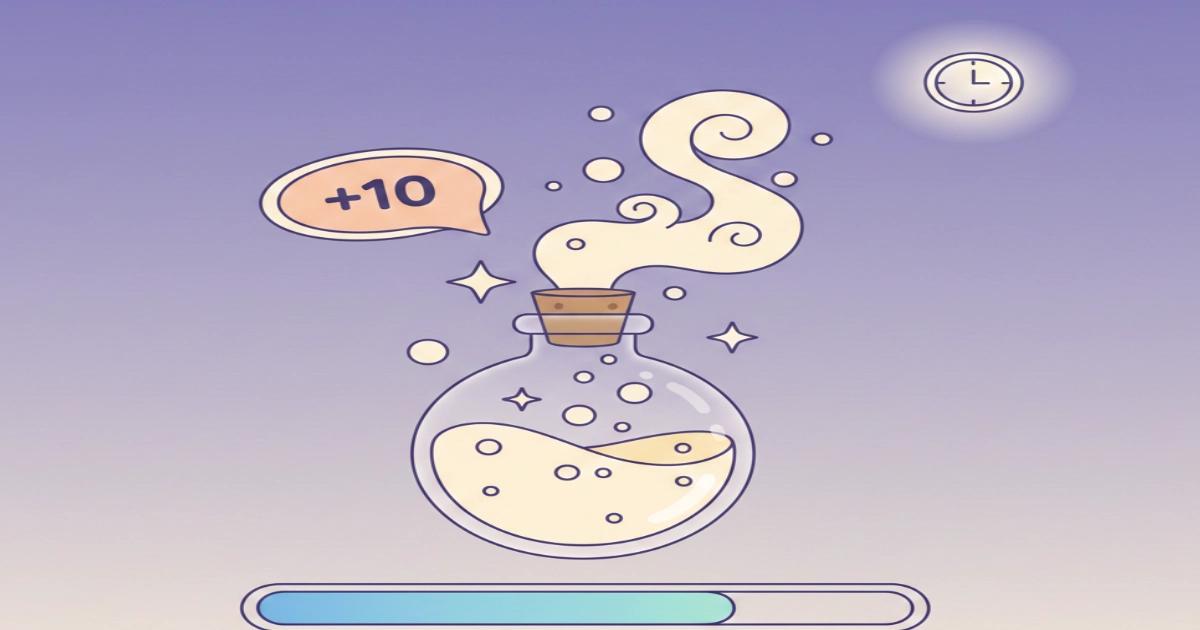
Rewards can feel bright—and slightly urgent.
3) Calm loops psychology: why predictable comfort matters
Calm loops are shaped around steadiness rather than excitement. They offer progress without pressure, feedback without urgency, and repetition without threat.
In calm loops psychology, the key feeling is emotional safety. You still move forward, but nothing bad happens if you stop, pause, or repeat an action. Progress arrives quietly: a soft animation, a gentle sound, a familiar routine completed.
Because there is no rush, the nervous system can shift out of performance mode. This is why many cozy players gravitate toward slow crafting, decorating, organizing, or exploration—activities where attention can rest instead of brace.
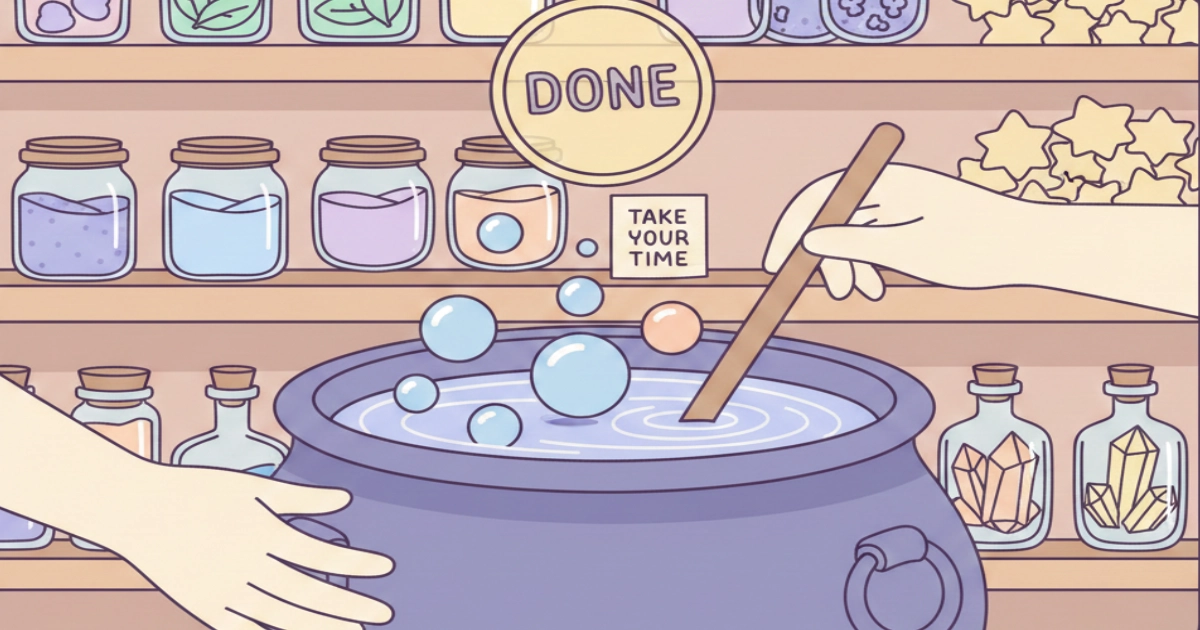
Progress that arrives quietly can feel deeply settling.
4) When rewards support comfort—and when they disrupt it
Reward loops are not inherently stressful. In cozy games, they can add gentle structure: a daily letter, a small delivery, a collection slowly filling over time.
The emotional shift happens when rewards become the main reason to play. If missing a day feels like failure, or if stopping creates anxiety, the loop has crossed from encouragement into pressure.
A simple rule helps here: rewards should invite, not push. When progress feels optional and forgiving, it supports calm. When it feels urgent or fragile, it can undermine the sense of safety cozy games aim to create.
5) How calm-first loops feel when rewards are used gently
Many comforting games blend calm and reward in a soft way. The loop itself feels like a routine, while rewards act as warm punctuation—acknowledgment rather than demand.
In these experiences, calm remains the emotional baseline. Rewards never interrupt rest; they simply mark moments of care and completion.
- Progress feels steady: outcomes are consistent and predictable.
- Stopping feels allowed: there is always a natural pause point.
- Care is rewarded: patience, attention, and creativity matter more than speed.
- Rest is visible: organizing, tidying, or simply observing still feels meaningful.
- Urgency is optional: extra activities are choices, not obligations.
Visually, these loops often pair with soft motion and gentle transitions. If you’re curious how movement supports comfort, you may enjoy The Science of Soft Animations: Why Smooth Frames Calm the Brain.
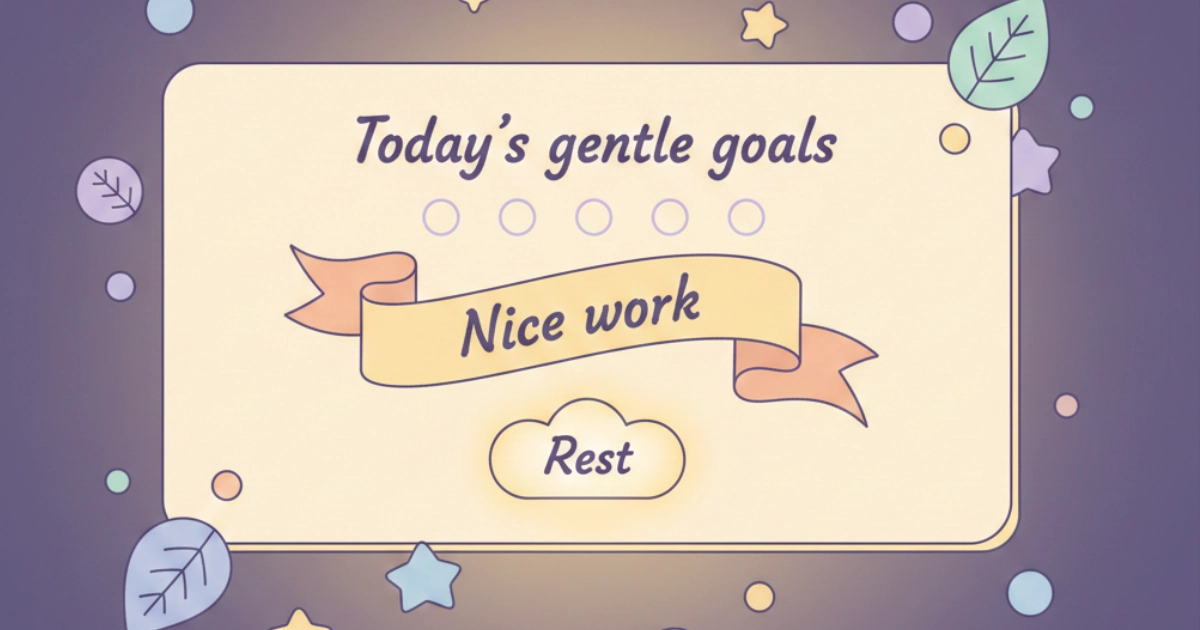
Rewards can exist without rushing the player.
Final Thoughts
Reward loops energize and motivate. Calm loops soothe and stabilize. Both shape how a game feels inside the body—but they lead to very different emotional climates.
If your goal is comfort, starting from calm and layering rewards lightly can protect attention and reduce stress. And if you’d like to follow the calm-first approach we’re exploring in Potion Game, you can join the waitlist for gentle updates and cozy design notes.
Want to be part of a new cozy alchemy adventure?
Join the Potion Game waitlist 💛