Gentle feedback anxiety is a real emotional problem in play: when a game reacts to mistakes with harsh sounds, loss, or shame, many players tense up and stop experimenting.
Cozy and relaxing games often do something different. They treat errors as information, not as failure, so your nervous system can stay settled while you learn.
This article explains why no-punishment feedback can lower anxiety, what it looks like in practice, and how calm games can build emotional resilience through safe, supportive rhythms.
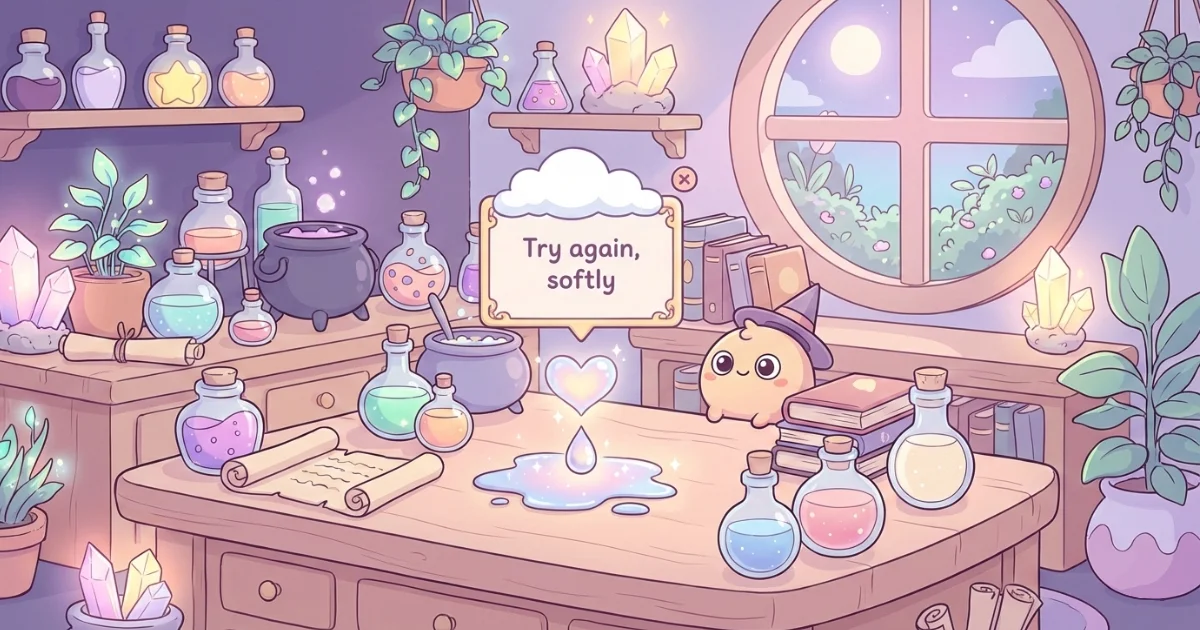
A mistake becomes a calm, helpful moment.
Table of Contents
1) Why punishment can feel like a threat to an anxious brain
For many anxious players, “punishment” does not land as playful challenge. It can feel like a threat signal: loud failure sounds, big red warnings, losing progress, or being forced to repeat long sections.
When the brain senses threat, it shifts into protection mode. Attention narrows, the body tenses, and curiosity drops. In that state, even small mistakes can feel bigger than they are.
2) Gentle feedback anxiety: how soft signals create safety
Gentle feedback anxiety support works because it changes the meaning of a mistake. Instead of “You failed,” the experience communicates, “You learned something, and you’re still safe.” That difference matters.
In simple terms, feedback shapes interpretation: how you understand what just happened. When errors are framed as normal steps, the mind stays more open and flexible, which supports learning and calmer emotion.
A useful way to think about this is self-determination: people tend to feel better when they experience autonomy (choice), competence (improvement), and relatedness (warm, human tone). Gentle feedback supports all three, while punishment often undermines them.
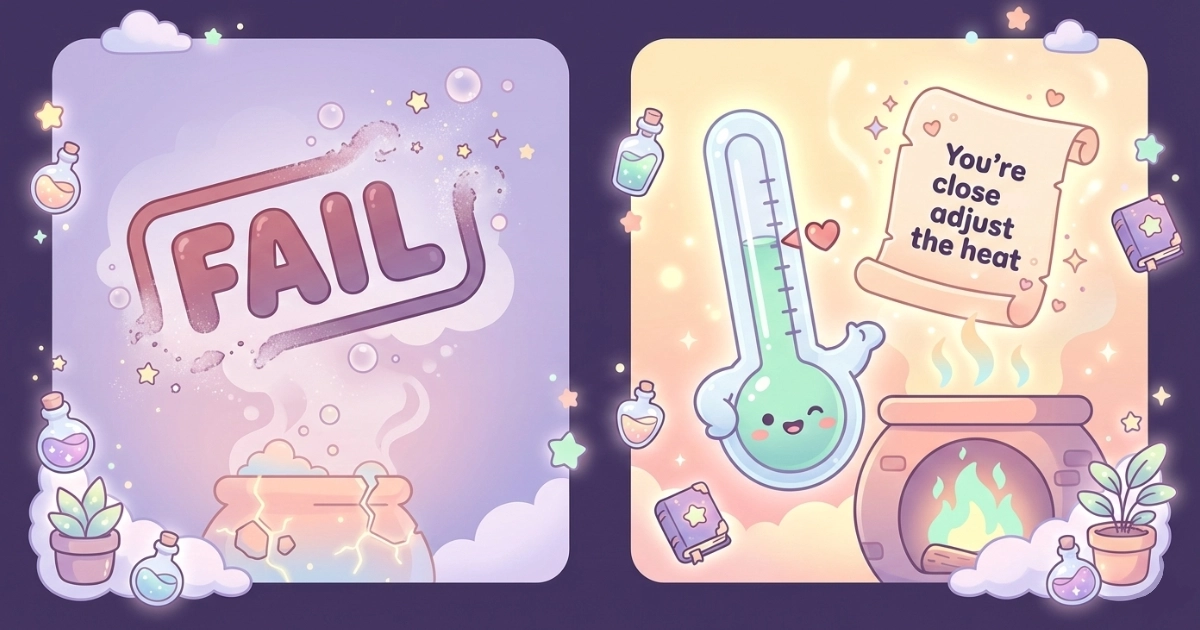
Guidance calms; punishment spikes pressure.
3) What gentle feedback looks like in cozy and relaxing games
Gentle feedback is not “no challenge.” It is feedback that is clear, kind, and easy to recover from. The experience still communicates what went wrong, but without humiliation or heavy loss.
Here are common patterns that lower anxiety while keeping play meaningful:
- Low-cost retries: quick restarts and short returns, without long “walks back.”
- Protected progress: frequent autosaves, generous checkpoints, and reversible choices.
- Actionable hints: “Try stirring slower” instead of “Wrong.”
- Soft sensory cues: gentle sounds and warm micro-moments instead of shock effects.
- Neutral language: describe what happened, not who you are (“The mix cooled down”).
- Optional support: hints or assist options that feel normal, not shameful.
In a cozy alchemy moment like Potion Game, feedback can feel like a friendly guide: “Your potion is a little cloudy—maybe it needed one more slow swirl.” It keeps the mood calm while still helping you learn.
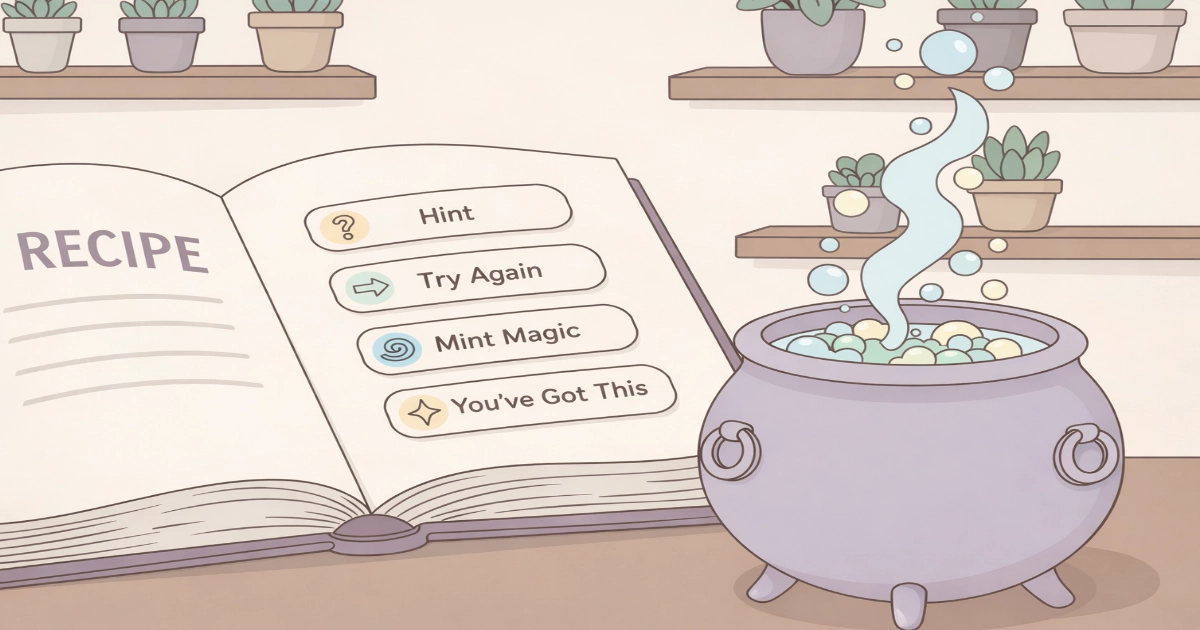
Help that feels like care, not judgment.
4) Why gentle feedback builds emotional resilience over time
When players can miss safely, they practice emotional recovery in small doses. The nervous system learns a quiet lesson: “I can try, miss, and come back.” That is resilience, built gently.
Non-punitive feedback also supports a growth mindset: effort matters, mistakes are expected, and progress is visible. Over time, this reduces fear of experimenting—the fear that often blocks anxious beginners.
In calm games, this creates a “digital calm” feeling. Instead of bracing for impact, you stay curious. And curiosity is naturally less anxious than self-protection.
5) Keeping meaning without shame or heavy loss
A common worry is: if there is no punishment, will the experience feel pointless? Not if clarity and consequence remain, while shame and heavy loss are removed.
Healthy consequence can be small and meaningful: a potion turns “good” instead of “great,” a character offers a kind suggestion, or you spend a little extra time correcting the mix. You still care—but you do not panic.
Another gentle shift is moving motivation from “avoid loss” to “enjoy improvement.” Many players feel energized when progress is celebrated: smoother stirring, better timing, prettier results, new recipes, or warmer reactions from characters.
If you want deeper context on how stress and interpretation work in everyday life, the American Psychological Association offers a helpful starting point: APA resources on stress. For a broader wellbeing angle, you can also explore guidance on stress and support here: Mind (UK) overview on stress.
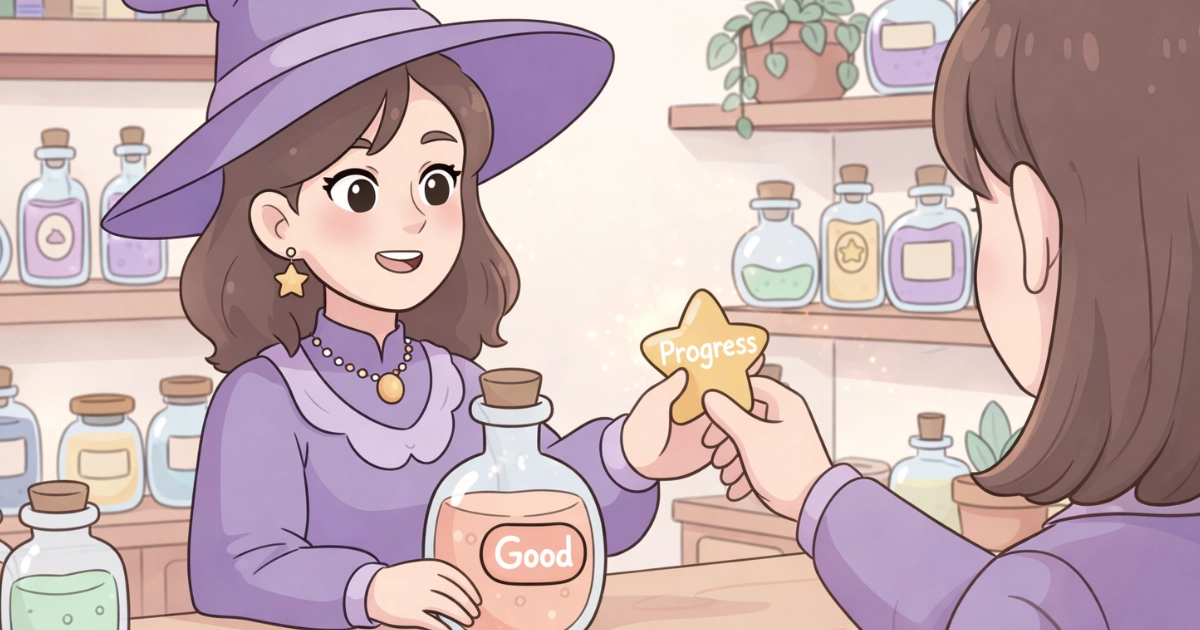
Rewards that encourage, not pressure.
Final Thoughts
Gentle feedback anxiety support is not about making games “too easy.” It is about keeping the player in a safe learning state, where mistakes do not trigger panic, shame, or shutdown.
If you enjoy cozy games for stress relief, you might also like How Cozy Games Help Your Brain Recover from Daily Stress and The Psychology of Soft Tasks: Why Small Rituals Calm the Mind.
If Potion Game sounds like your kind of calm, supportive experience, join the waitlist—and let your next small ritual feel safe, warm, and quietly empowering.
Want to be part of a new cozy alchemy adventure?
Join the Potion Game waitlist 💛