Slow gameplay loops reduce stress far more effectively than most players think. Many people search for “which games help you relax?” or “What game relaxes the mind??” without realizing that the answer often lies in a single design principle: soft, predictable, slow-paced routines. These loops are the foundation of cozy games, and scientific evidence shows they have a measurable calming effect on the mind.
In this article, we explore why slow gameplay loops reduce stress, how gentle interactions support emotional wellbeing, and why cozy games feel soothing even during short sessions.
Table of Contents
1. Slow Gameplay Reduces Cognitive Pressure
Fast-paced games often require rapid decisions, multitasking and constant vigilance. This increases cognitive load and can trigger stress responses in the body. Slow gameplay loops reduce stress because they create a low-pressure environment where the mind finally has room to breathe.
Research in cognitive science confirms that:
- predictable tasks reduce mental fatigue
- monotasking lowers stress compared to multitasking
- slow pacing supports emotional regulation
This is why cozy games feel like a “mental breath” at the end of a long day.
2. Predictable Routines Calm the Nervous System
Slow gameplay loops reduce stress because they rely on gentle routines: watering plants, decorating a room, crafting items, collecting soft resources. These actions act as digital rituals, creating a stable rhythm for the mind.
According to behavioral psychology, predictable routines:
- reduce uncertainty (one of the main sources of stress)
- stabilize emotional responses
- activate comfort-seeking neural pathways
In simple terms: your brain relaxes when it knows what comes next.

A cozy warm 2D illustration showing predictable calming tasks a hand gently arranging books on a shelf, and another hand lighting a small candle with a soft flame. Parchment cream background
Arranging books and lighting a candle illustrate gentle, calming tasks in slow cozy gameplay.
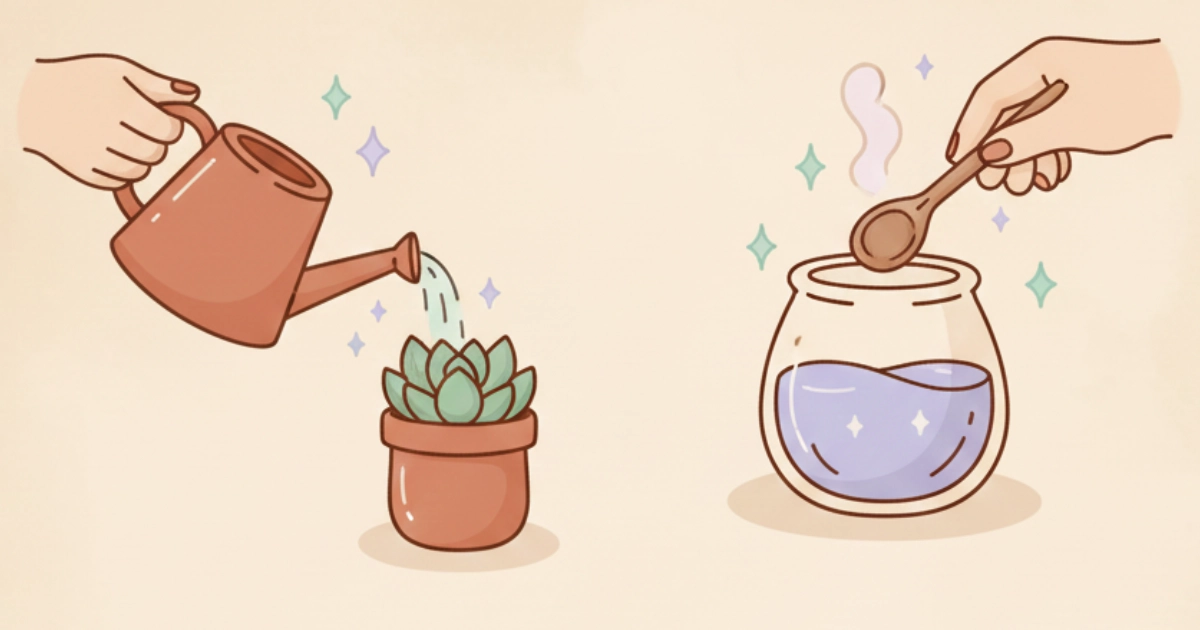
Cozy illustration of watering a plant and stirring a potion
Watering a plant and stirring a potion represent soothing slow gameplay rituals.
3. Low-Pressure Feedback Helps Emotional Regulation
Another reason why slow gameplay loops reduce stress is the absence of punishment. Cozy games rarely penalize mistakes, demand fast reactions or enforce performance metrics.
Studies on emotional regulation show that:
- gentle feedback lowers anxiety
- non-punitive tasks reduce internal pressure
- slow pacing stabilizes mood over time
The result is a soft, safe space ideal for players seeking relaxation or recovery from overstimulation.
Google’s Digital Wellbeing guidelines explain how gentle digital experiences can reduce overstimulation and support calm focus:
Google Digital Wellbeing.
4. Slow Loops Create Light Flow States
“Flow” is a psychological state where attention becomes calm, focused and lightly absorbed. Normally, flow is triggered by challenge — yet cozy games achieve a gentle form of flow without pressure.
This happens because slow loops include:
- small, achievable goals
- clear and simple tasks
- predictable rewards
- no time limits
This kind of soft engagement explains why slow gameplay loops reduce stress even during very short play sessions.
5. Slow Games Feel Like Digital Rituals
Cozy games often turn slow loops into soothing digital rituals. Stirring a potion, arranging shelves, cleaning a small mess, trimming a plant — these actions feel familiar and grounding.
Environmental psychology demonstrates that rituals:
- reduce stress
- increase emotional stability
- improve attention regulation
This is why slow cozy games are frequently recommended when players ask “Which games help me calm down?”
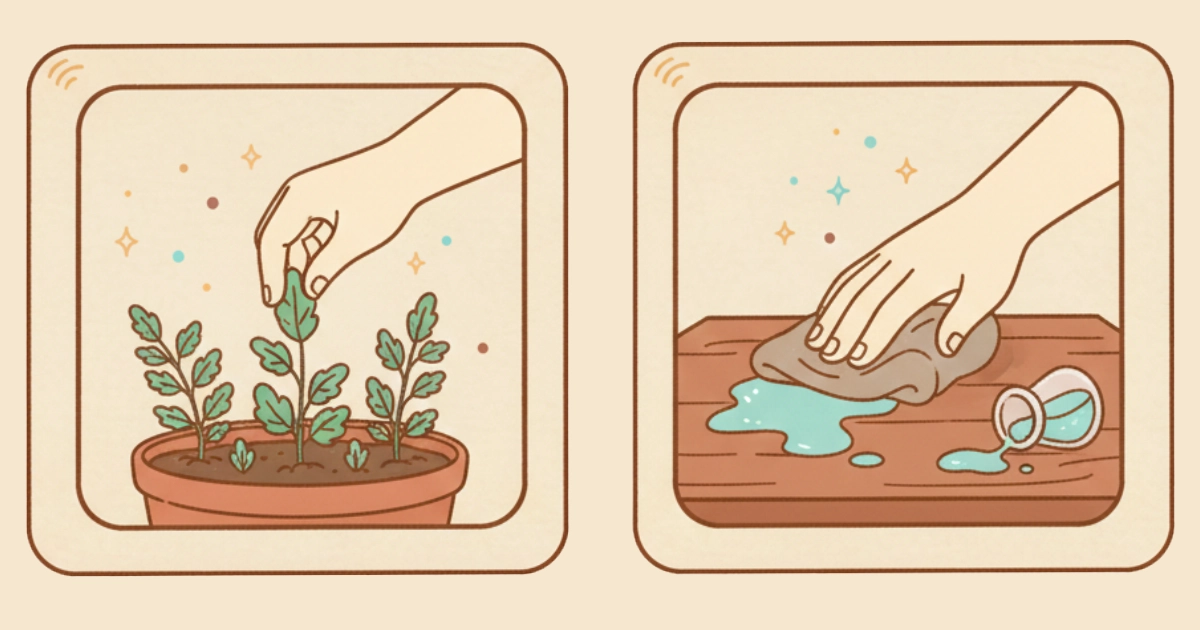
Gently trimming plants represents a soothing slow gameplay ritual.
6. Why Slow Gameplay Helps You Relax (Scientific Add-on)
Additional research on digital wellbeing shows that slow gameplay loops reduce stress by gently redirecting attention. When players focus on simple, predictable actions — watering a plant, organizing items, wiping a tiny potion spill — the brain enters a state similar to mindfulness micro-breaks.
Cognitive load decreases, emotional noise settles, and the player naturally adopts a calmer breathing rhythm. This is one of the main reasons cozy games consistently appear in searches like “games that help you relax” or “game for relax”
Final Thoughts
Slow gameplay loops reduce stress through predictable routines, gentle feedback, low cognitive pressure and soft flow states. Whether you want to unwind, relax before sleep, or escape overstimulation, slow cozy games remain one of the most effective digital tools for calming the mind.
If you enjoy soft, slow-paced experiences, you may appreciate upcoming cozy titles like Potion Game, which uses warm palettes and gentle loops designed specifically for relaxation.
For more cozy science, explore our main article: Why Cozy Games Are So Popular
Absolutely. The structure and pace of loops influence stress levels, emotional states, and cognitive recovery.
Cozy simulation, crafting, decorating and farming games are among the most effective for relaxation due to their gentle loops.
Yes. Scientific research shows that slow-paced, low-pressure games reduce stress more effectively than fast or competitive games.
Because they reduce cognitive pressure, offer predictable tasks, and support gentle emotional regulation.
Want to be part of a new cozy alchemy adventure?
Join the Potion Game waitlist 💛