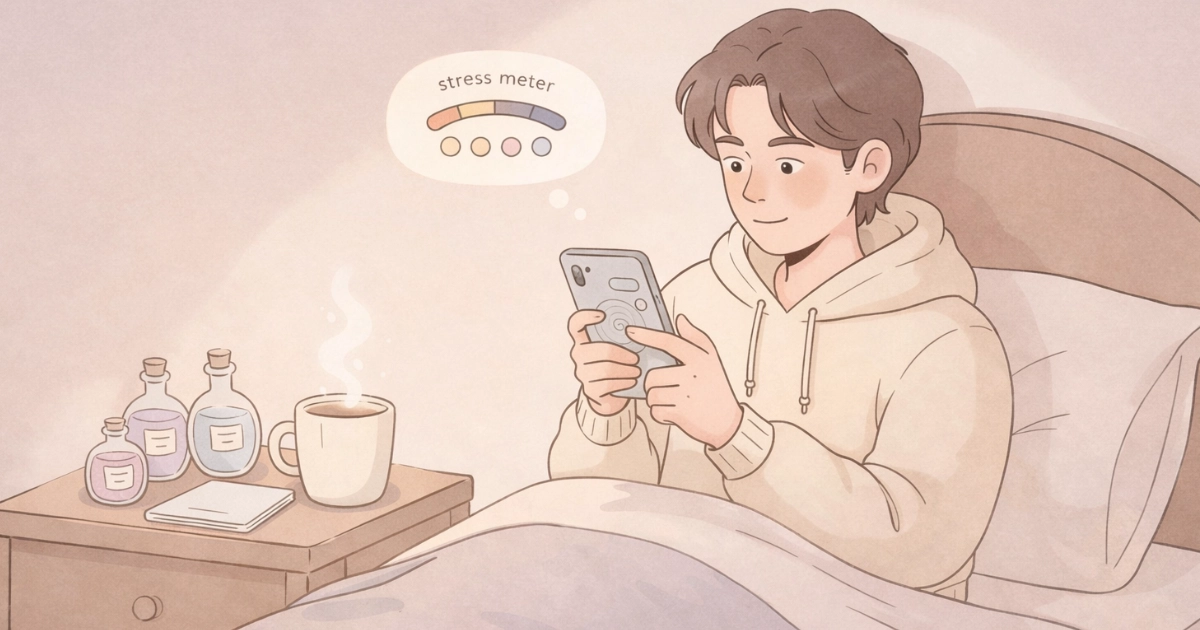
If you are searching for a relaxing games list, you are probably not looking for “the best game ever.” You are looking for a softer brain state: slower thoughts, steadier breathing, and a sense that nothing bad will happen if you make a small mistake.
Psychology helps explain why some games feel like a warm cup of tea while others feel like a loud room. Relaxing games often support predictability, gentle control, and low social pressure. They also give your attention something simple to hold, which can make worries feel quieter.
Below is a calm, practical list of relaxing games, grouped by the mental “need” they tend to soothe. Not every game will work for every person, so think of this as a menu, not a test.
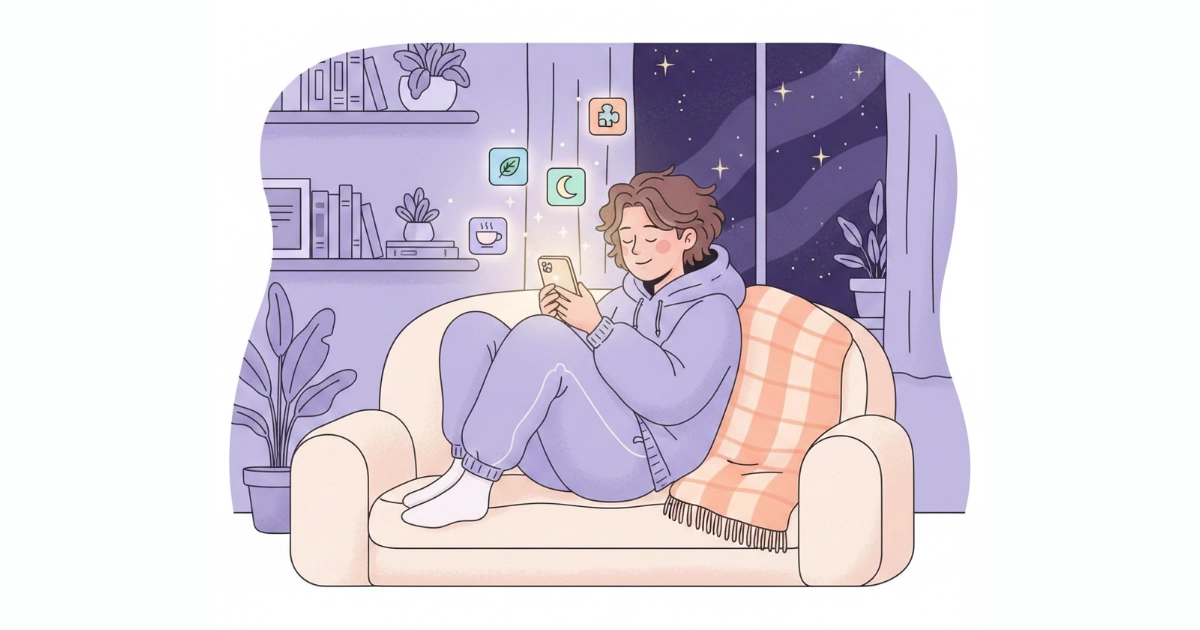
A small, safe pocket of calm before sleep.
Table of Contents
- 1) What makes a game “relaxing” in psychology terms?
- 2) Relaxing games list for “safe control” and predictable comfort
- 3) Calm games for anxious minds: soft attention and “gentle focus”
- 4) Relaxing games for sleep: low light, short sessions, clean stopping points
- 5) A practical relaxing games list by “calm need” (pick one, not all)
- Final Thoughts
1) What makes a game “relaxing” in psychology terms?
A relaxing game usually reduces “threat signals.” That can mean fewer sudden punishments, fewer time limits, and fewer moments where you feel judged. When your brain expects safety, your body can downshift from alert mode into rest mode.
Many stress-management guides recommend simple relaxation skills like slow breathing, grounding, and mindfulness because they lower perceived stress and help you return to the present moment. Games can support the same goal when they are predictable, gentle, and easy to pause. For a general overview of relaxation approaches, see the NIH summary of relaxation techniques here: Relaxation Techniques (NIH).
2) Relaxing games list for “safe control” and predictable comfort
One of the fastest ways to feel calm is to feel in control. Not “perfect,” just able to predict what happens next. Games with clear loops, friendly feedback, and forgiving failure can feel like a quiet room you can tidy at your own pace.
These games often help when you feel overstimulated, stressed from work, or emotionally scattered. They tend to be soft in pacing, and they avoid harsh surprises.
- Stardew Valley (especially slow, offline sessions): routine, gentle goals, seasonal rhythm.
- Animal Crossing: Pocket Camp (or similar decorating loops): small tasks, cozy collecting, low stakes.
- Unpacking: calm sorting, simple decisions, steady progress.
- Townscaper (or “toy city” builders): pure control, no punishment.
If you want a deeper design angle on calm visuals, you may also enjoy our internal guide: How Pastel Palettes Reduce Cognitive Load in Games.
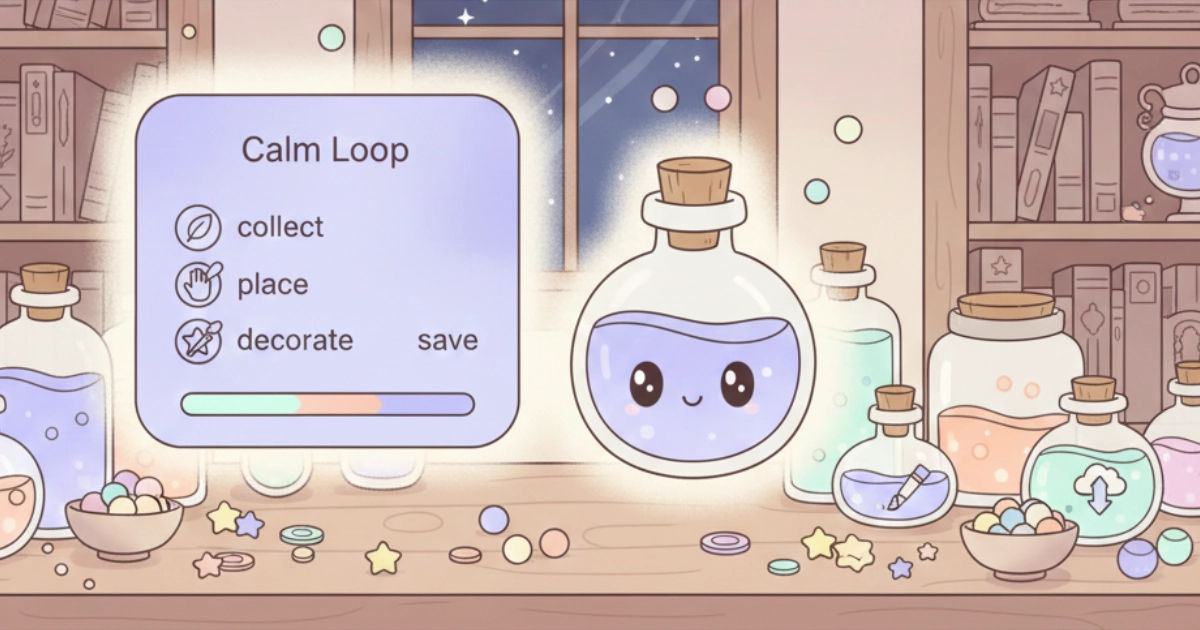
Predictable steps help the mind feel safe.
3) Calm games for anxious minds: soft attention and “gentle focus”
Anxiety often pulls attention into “what if” thinking. Relaxing games can help by giving your brain a small, steady target: a rhythm, a pattern, a tiny job. This is not about forcing your mind to be quiet. It is about giving it something kinder to hold.
Games that support “gentle focus” are usually simple to learn, easy to pause, and not noisy. They are also great as a bridge between a busy day and a calmer evening.
- Nonograms / Picross-style puzzles: quiet structure, slow problem-solving.
- Sudoku (easy to medium): calm logic, clear stopping points.
- Flow Free / simple path puzzles: smooth visual order, low stakes.
- Hidden object games (low timer pressure): soft searching, slow scanning.
If anxiety is high, you may also like pairing a calm game with a short mindfulness practice. The NHS overview is clear and practical: Mindfulness (NHS).
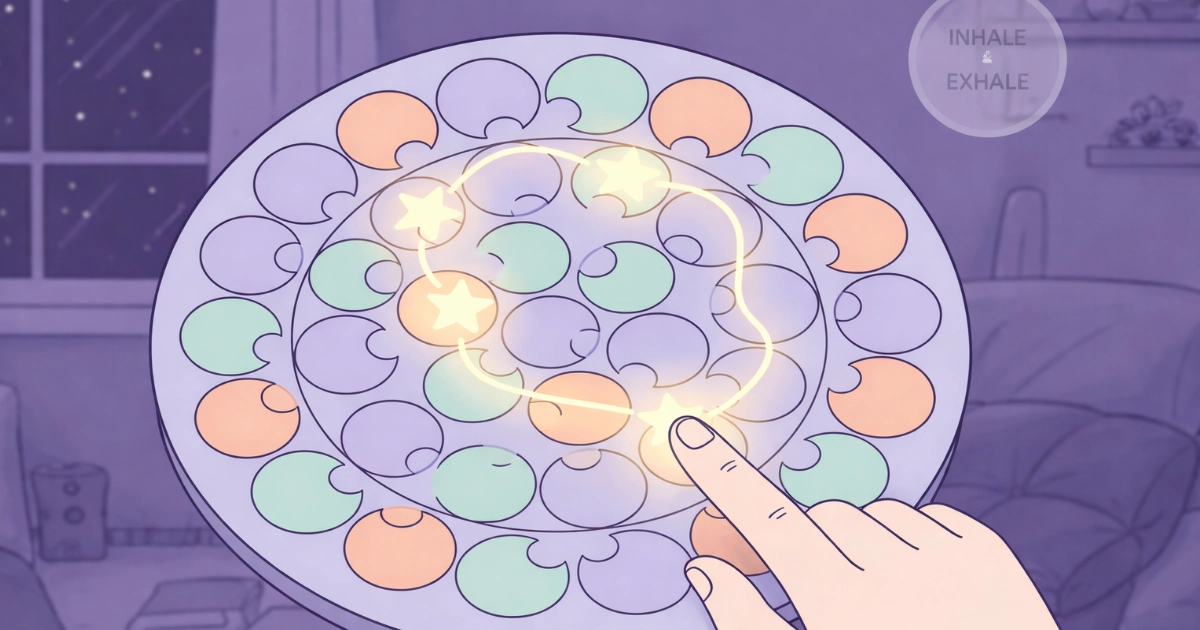
Soft puzzles can feel like guided attention.
4) Relaxing games for sleep: low light, short sessions, clean stopping points
Not every “cozy” game is good before bed. Some are cozy but still activating: bright screens, endless tasks, or “just one more” rewards. For sleep gamers, the most relaxing choice is often a short session with a clear end.
Look for games that let you stop after a small loop: one day, one puzzle, one delivery, one room. Also consider lowering brightness and sound. Your goal is to feel gently finished, not excited.
If you want an audio-first version of calm, sound design matters too. Here is a related internal article: How Gentle Soundscapes Reduce Anxiety in Cozy Games.
5) A practical relaxing games list by “calm need” (pick one, not all)
Sometimes the easiest way to choose is to ask: “What kind of calm do I need today?” Here are five small pathways. Pick one, try it for 10–20 minutes, and notice what your body does.
- I need to feel safe: decorating games, no-fail builders, gentle farming loops.
- I need my thoughts to slow down: nonograms, easy logic puzzles, sorting games.
- I need a soft sense of achievement: cooking sims, cozy management without timers.
- I need emotional warmth: story games with kind characters and low conflict.
- I need a “reset” after stress: short mindful play plus breathing or grounding.
For broader wellbeing context, the World Health Organization also summarizes stress-management approaches, including relaxation and mindfulness training: Stress management techniques (WHO).
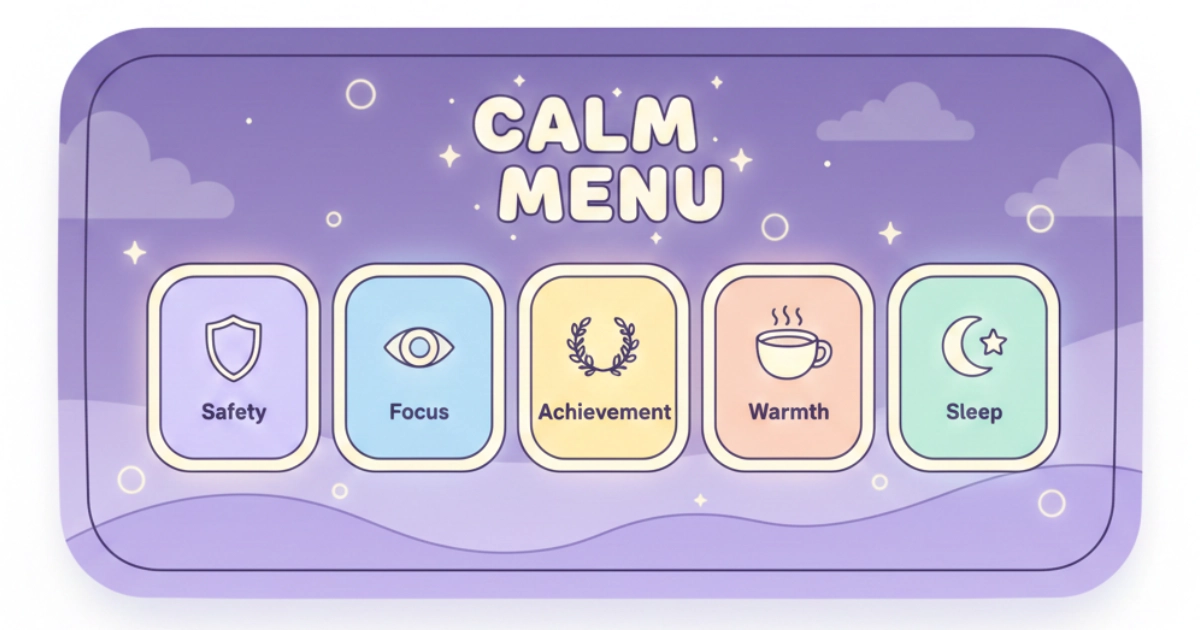
Choose the kind of calm you need today.
Final Thoughts
A good relaxing game is not “empty.” It is structured comfort. It gives your mind something gentle to do, without making you feel tested. If a game makes you feel calmer, it counts, even if it looks simple.
If you enjoy this kind of calm design thinking, you will probably like Potion Game: a cozy alchemy experience built around soft pacing, tactile rituals, and warm feedback. When you are ready, join the waitlist and step into a quieter kind of crafting.
Want to be part of a new cozy alchemy adventure?
Join the Potion Game waitlist 💛