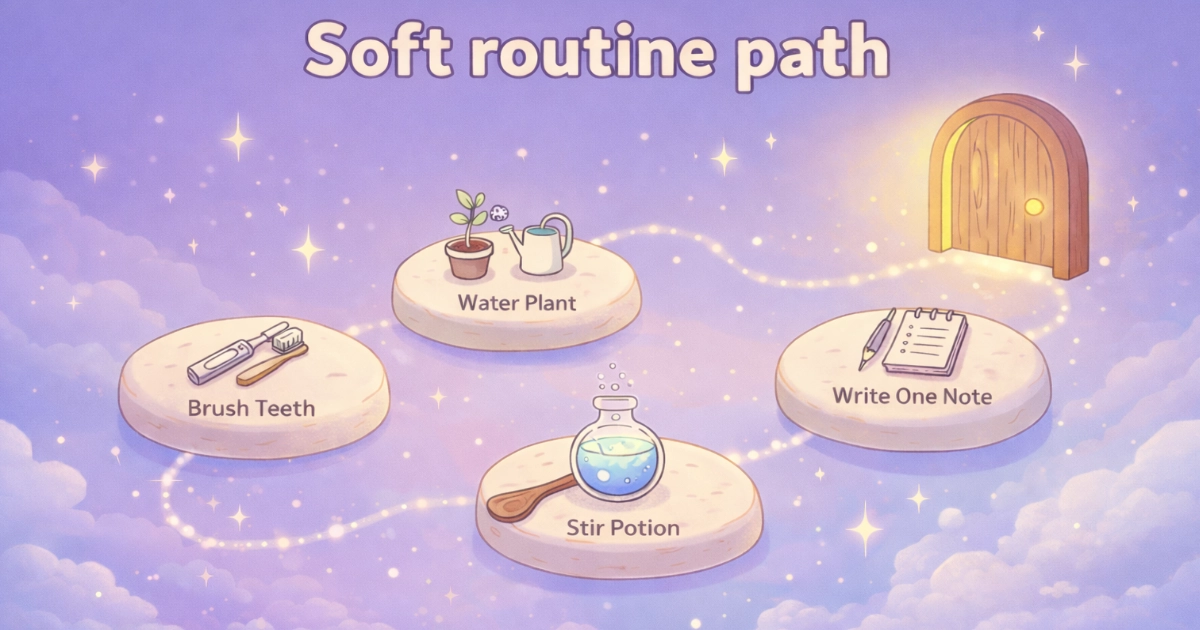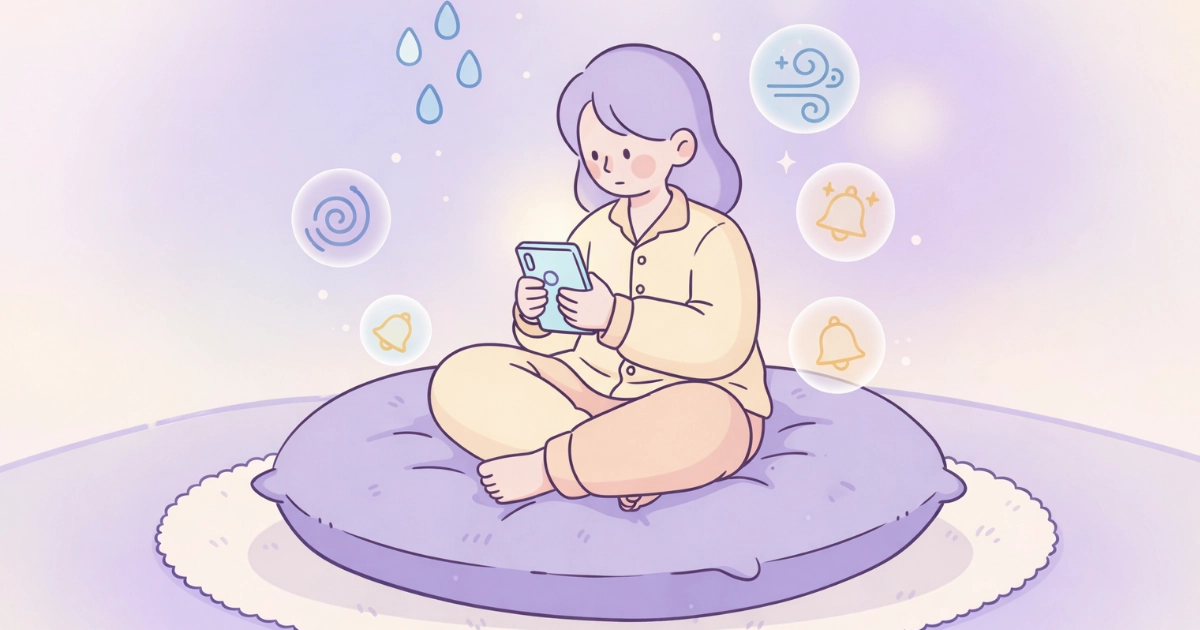
When life feels chaotic, many people instinctively reach for small, gentle activities: watering a plant, arranging a shelf, brewing tea, or playing relaxing games on their phone. These are not “big achievements”, yet they soothe us deeply. This is the psychology of soft tasks at work—small rituals that calm the mind through predictability, rhythm, and low pressure.
In cozy games, soft tasks are everywhere: stirring a potion, harvesting a few crops, tidying a virtual room, feeding a creature. For stressed adults, anxious players, and people living with digital burnout, these simple actions can feel like tiny islands of calm in a noisy world.
In this article, we will explore how the psychology of soft tasks works, why small rituals are so comforting, and how cozy games intentionally use them to support relaxation and emotional recovery.
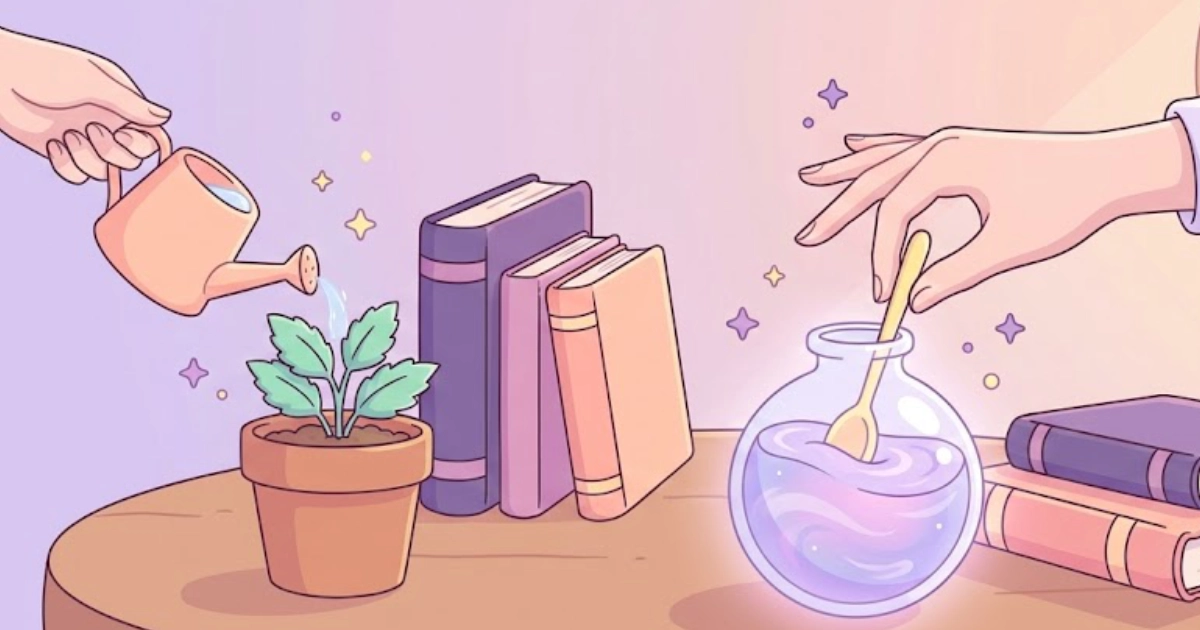
Table of Contents
What Are Soft Tasks in Games and Daily Life?
Soft tasks are simple, low-stress actions that are easy to understand and hard to “fail”. They often involve gentle repetition and clear beginnings and endings: water this plant, stir this liquid, place this object, light this candle. They are the opposite of high-stakes decisions or complex multitasking.
In daily life, soft tasks might be folding laundry, preparing a simple meal, or making a cup of tea. In cozy games, they appear as basic interactions: tapping to harvest, dragging ingredients into a cauldron, arranging furniture, petting a cat. These actions are designed to feel safe, predictable, and emotionally light.
How the Psychology of Soft Tasks Calms the Mind
The psychology of soft tasks is rooted in several well-known principles from cognitive science and mental health. One of them is predictability. Our brains like to know what comes next. When a task has clear steps and a clear result—stir three times, watch the potion change color—it lowers uncertainty, which is a major source of stress.
Soft tasks also reduce cognitive load. They are simple enough that you do not need to plan, compare, or evaluate complex options. According to research on attention and stress management, low-demand activities can give the prefrontal cortex a break and help restore mental energy, similar to how gentle walks in nature restore focus. You can read more about this effect in resources from clinical psychology and behavioral science.
A third aspect is small mastery. Every time you complete a soft task—finish a potion, place a bottle on the shelf—you get a micro “success”. This creates a subtle but steady sense of agency: “I can do things. I can finish things.” For anxious or overwhelmed players, this feeling is precious.
From Overstimulation to Digital Calm: Soft Tasks as an Antidote
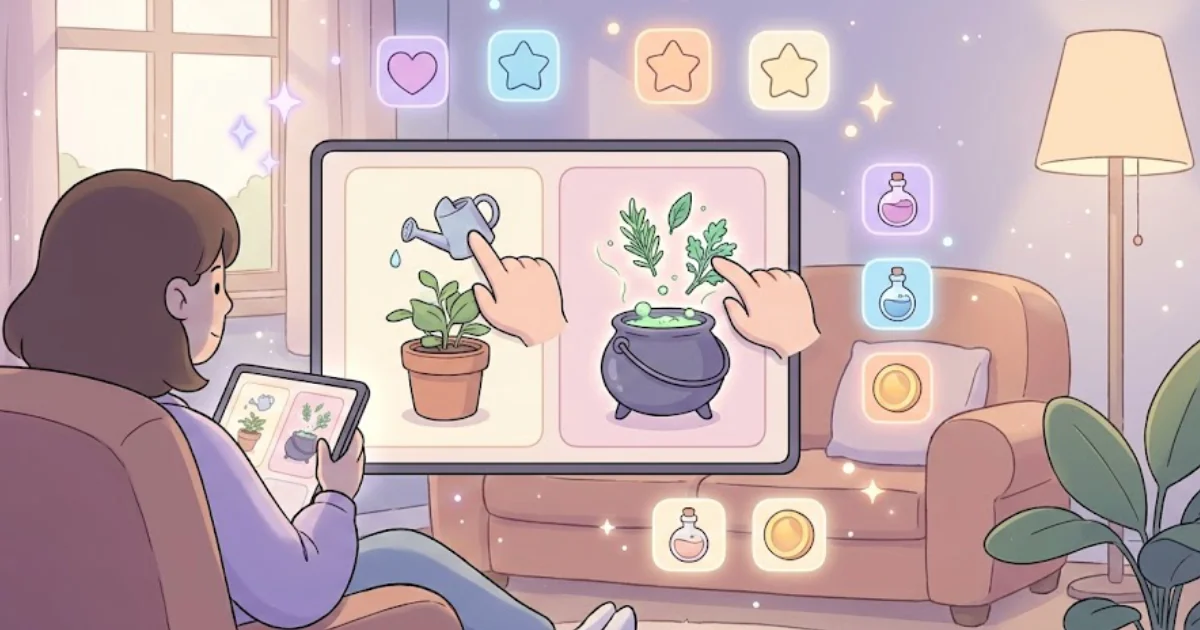
Modern life is full of fast, high-intensity digital experiences: endless feeds, fast-paced shooters, constant alerts. For many adults, this leads to digital overload. Attention is pulled in many directions at once, and the nervous system rarely gets a chance to slow down.
Soft tasks move in the opposite direction. They slow the tempo and encourage single focus. Instead of juggling multiple notifications, your attention rests on one small action: slicing a herb, pouring a liquid, placing a bottle in its slot. The world becomes smaller, more contained, and much easier to process.
This is similar to mindfulness practices where you focus on one breath or one physical sensation at a time. In fact, some researchers describe gentle, repetitive interactions as a form of “micro-meditation”. A cozy game that asks you to stir slowly instead of reacting quickly can act as a digital mindfulness tool, especially in the evening when your brain needs to release the tension of the day.
Soft Tasks, Emotion Regulation, and Gentle Self-Care
Soft tasks also help with emotion regulation. When you are anxious or stressed, your body often feels restless, but your mind is scattered. Small rituals give that restlessness a safe channel: your hands move, your eyes follow a simple pattern, and your mind receives a clear, calm script to follow.
Psychological models of self-soothing suggest that repetitive, predictable actions—like knitting, doodling, or brewing tea—can lower physiological arousal and create a sense of safety. Cozy games tap into this by offering symbolic care-taking: you take care of plants, potions, creatures, or spaces. You create order, beauty, and comfort, even inside a small screen.
This is one reason why cozy games for stress relief often avoid harsh failure states. Instead of punishing mistakes, they use gentle feedback. If your potion fails, it might fizzle or change color in a funny way instead of triggering a “Game Over” screen. This reduces fear of failure and keeps the emotional climate warm and forgiving. You can explore this idea further in our article on why gentle feedback lowers anxiety in games.
Designing Soft Tasks in Cozy Games for Stress Relief
For game designers, soft tasks are not just a theme—they are a powerful design tool. When designing cozy games for stress relief, the structure of each task matters as much as the art style. A good soft task is:
- Easy to understand at a glance.
- Low-risk, with no harsh punishment.
- Predictable in both action and result.
- Visually and audibly rewarding, but not overwhelming.
- Completable in a few seconds.
In an alchemy-style cozy game, for example, a well-designed soft task might be: drag ingredient → release over the cauldron → see a gentle splash → hear a soft sound → watch the potion glow. This tiny sequence is enough to feel “complete” and satisfying, especially when repeated as part of a larger, calm crafting loop.
If you want to dive deeper into how cozy games structure these loops to support wellbeing, you can read our guide on cozy games and stress recovery, where we connect ritual design with session length, soundscapes, and visual pacing.
Soft Tasks, Aesthetics, and the Feeling of Safety
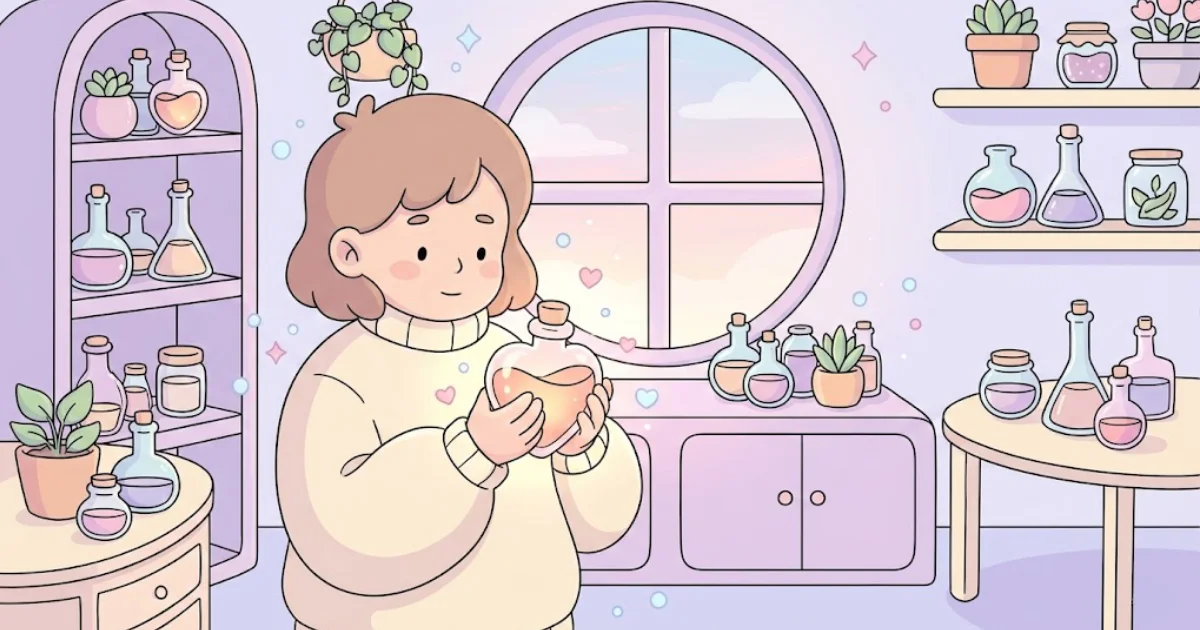
The emotional power of soft tasks is strongly tied to aesthetics. It is easier to relax while stirring a pastel-colored potion than while clicking through harsh, flashing red alerts. Visual psychology shows that soft shapes and muted colors can make environments feel safer and more approachable, especially for anxious users.
This is why many cozy games, including alchemy-themed titles, use rounded shapes, pastel palettes, and gentle lighting. These choices tell your nervous system: “Nothing bad will jump at you here.” Paired with the psychology of soft tasks, this creates a full “digital safe room”.
Color and light research in environmental psychology supports this idea, suggesting that lower-contrast, warm-toned scenes can reduce arousal and support relaxation. You can find more detail in color psychology resources used in UX and wellbeing design.

Final Thoughts
Soft tasks might look small, but their psychological impact is big. By combining predictability, low cognitive load, gentle repetition, and nurturing themes, they help transform screen time into genuine recovery time. For stressed adults, anxious players, and evening gamers looking for digital calm, the psychology of soft tasks explains why cozy games feel like a warm exhale at the end of the day.
If you are curious to experience an alchemy world built entirely around soft, cozy rituals, you can join the Potion Game waitlist and be among the first to explore a calm little shop where every small gesture—stir, pour, water, arrange—helps your mind slow down and breathe again.
Want to be part of a new cozy alchemy adventure?
Join the Potion Game waitlist 💛