When life feels messy, the mind doesn’t only want comfort. It wants clarity. The predictability routines science is simple: when your brain knows what comes next, it spends less energy scanning for surprises.
That saved energy matters. It can lower stress, reduce decision fatigue, and create a gentle sense of emotional safety—especially for people who feel overwhelmed by chaos, struggle with focus, or carry a constantly “busy” mind.
In this article, we explore what predictable routines do inside the brain, why soft habits work better than strict schedules, and how cozy games quietly reflect the same calming principle.

A tiny ritual can feel like a safe start button for the mind.
Table of Contents
1) Why the brain craves predictability
Your brain is built to anticipate. It constantly tries to predict what will happen next so it can conserve energy, stay oriented, and choose actions with less effort.
When the environment feels uncertain, the mind stays alert. That means more checking, more scanning, and more quiet “what if” thoughts running in the background. Over time, this can feel like tension, restlessness, or mental overload.
2) Predictability routines science, uncertainty, and stress
The predictability routines science connects closely to how the body experiences stress. When outcomes feel unclear, the nervous system may stay slightly activated, as if it needs to prepare for something unexpected.
This is why small repeated cues can feel so powerful. The same mug, the same short playlist, the same two-minute tidy send a simple signal: the environment is stable.
Over time, these predictable signals lower background tension. The brain can shift from constant vigilance into a more restorative mode, where energy is saved instead of spent.

Familiar cues gently turn down the feeling of “unknown.”
3) Soft routines vs. strict routines
Many people resist routines because they imagine rigid schedules and pressure. But a soft routine is different. It is a flexible pattern that gives the brain order without demanding perfection.
Soft routines work because they reduce mental negotiation. Instead of asking, “What should I do now?” your mind follows a familiar sequence. That simplicity frees attention for calm focus.
For people who feel scattered or easily overwhelmed, gentle structure can be especially supportive. It reduces the number of times the mind has to re-orient from zero.

Small, repeatable steps feel kinder than strict rules.
4) Why cozy games feel calming for the same reason
Cozy games often feel soothing for the same reason soft routines do. They offer predictable outcomes, gentle repetition, and clear cause-and-effect.
You know what will happen when you water a plant, stir a potion, or arrange a shelf. That predictability creates emotional safety. Instead of constant surprise, the mind receives steady feedback.
This is one reason cozy games for stress can feel like mental breathing space. The brain can relax into the rhythm instead of bracing for the next unknown.
If you want to explore how sound supports this calm focus, you may enjoy our article on cozy soundscapes and anxiety.
5) Building predictability without pressure
The goal is not to control your entire day. It is to create a few predictable islands where the mind can rest.
A gentle routine works best when it is easy to repeat, even on low-energy days. Instead of long schedules, choose one action that feels natural and reliable.
- The two-minute reset: clear one small surface, then stop.
- The same first sip: tea, water, or coffee at a familiar moment.
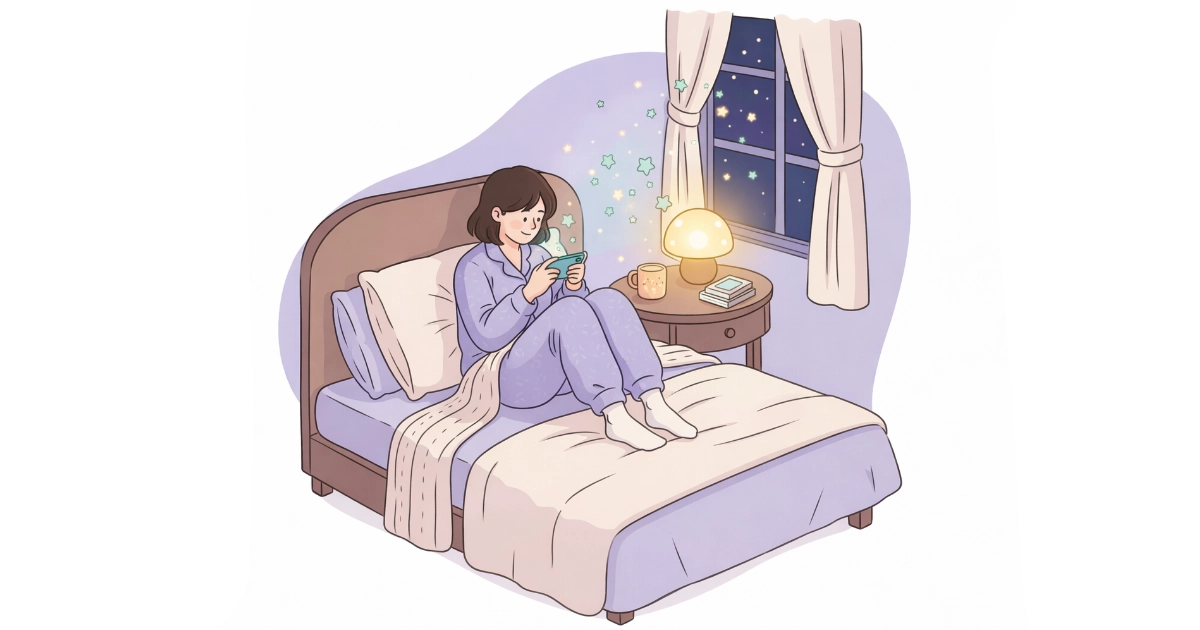
- The closing signal: dim lights, plug in your phone, one slow stretch.
- The tiny plan: write one priority, not ten.
- The cozy loop: a short, low-stakes game session with a clear ending.
What matters most is repetition without pressure. When a routine feels safe rather than demanding, the brain learns to associate it with calm and stability.

Predictable endings help the mind release the day.
Final Thoughts
Predictability is not boring to the brain. It is soothing. The predictability routines science shows that when your day includes a few stable, repeatable cues, the mind spends less energy bracing for the unknown and more energy feeling safe.
If you enjoy calm loops, soft tasks, and gentle progress, you may feel at home in the ritual-driven world we are building in Potion Game. If you would like to follow the journey, you can join the waitlist and step into a cozier rhythm.
Want to be part of a new cozy alchemy adventure?
Join the Potion Game waitlist 💛