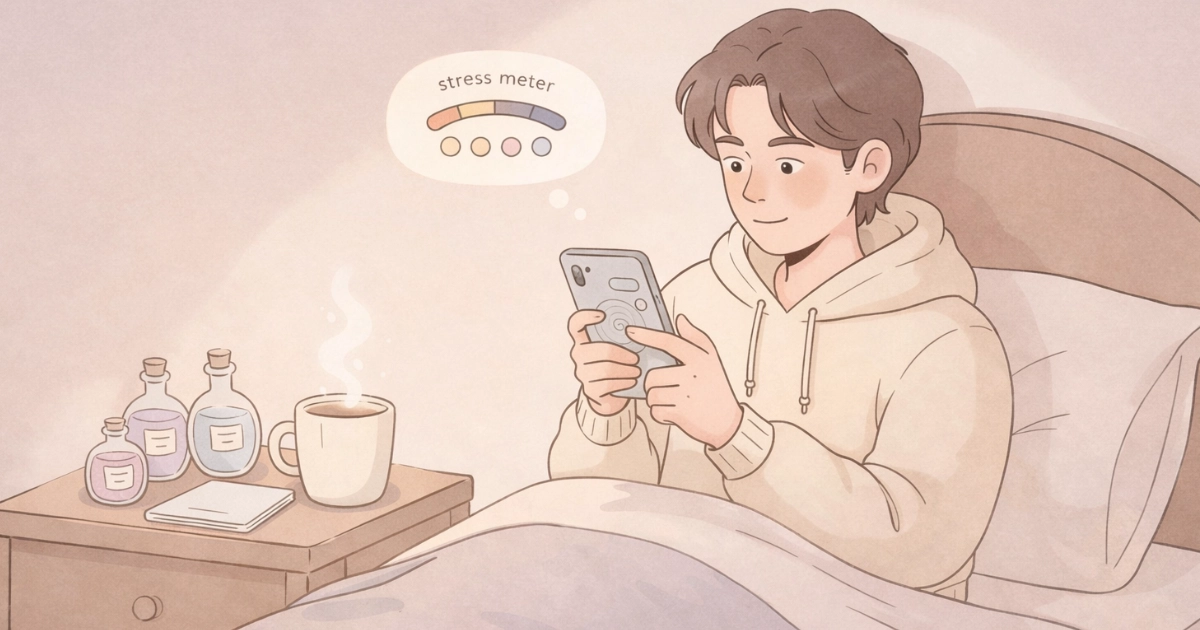
In a world of constant notifications, endless scrolling, and mental noise, many people look for tools that promise calm. Meditation apps, breathing timers, and relaxation sounds are popular — yet not everyone finds them easy to return to after a long day.
Cozy games wellness often feels different. Instead of asking you to “relax on command,” cozy games gently guide your attention, offer small choices, and reward quiet progress. The result can feel more natural, more engaging, and more emotionally grounding.
In this article, we explore why cozy games and relaxing apps affect the mind differently, and why games can create a deeper sense of calm for many people — using simple science and everyday experience.
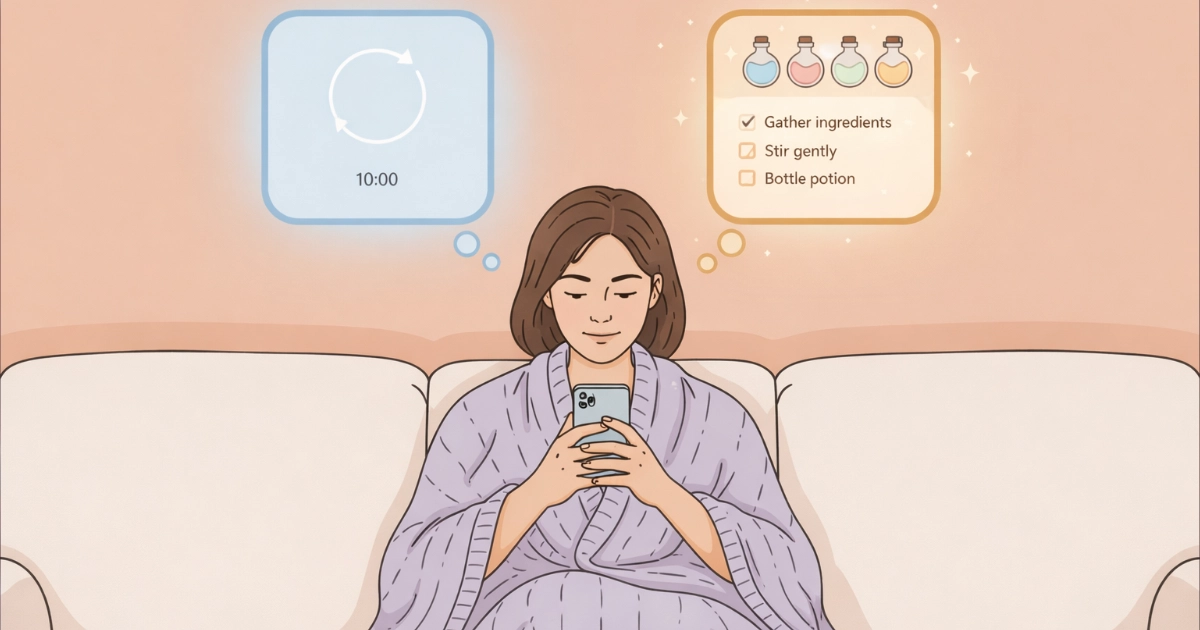
Sometimes the calmest option is the one that gently holds your attention.
Table of Contents
1) Why relaxing apps feel good, but don’t always last
Relaxation apps are very good at reducing stimulation. Soft audio, guided breathing, and minimal visuals can help lower tension, especially during moments of acute stress.
For some people, however, these experiences feel passive. When the mind is restless, sitting still and “doing nothing” can be surprisingly difficult. The app can start to feel like another task — something you should use, rather than something you want to return to.
When attention drifts or boredom appears, many people quietly abandon these tools, even if they know they are helpful.
2) Cozy games wellness is active calm, not forced quiet
Cozy games often feel calming because they offer gentle engagement. There is something small to do, something safe to focus on, and a clear sense of completion.
This matters because calm does not always come from silence. For many minds, especially tired or anxious ones, calm emerges through soft focus — a place where attention can rest without pressure.
A tiny task, a familiar rhythm, and kind feedback can replace rumination with presence. Not speed. Not performance. Just a steady, comforting flow.
In Potion Game terms, this can feel like a simple loop: receive a request, prepare ingredients, craft a potion, deliver it, and gently improve your space. That predictability can feel like a stable island in an otherwise noisy day. You can explore this idea further in How Cozy Games Influence the Nervous System (Simple Science).
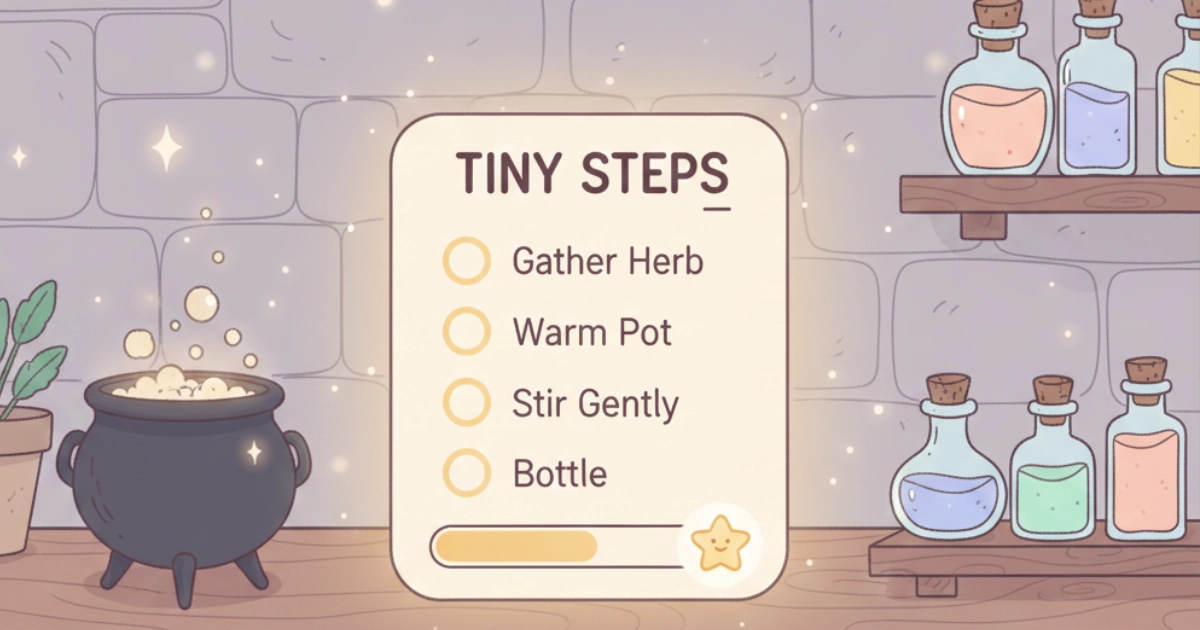
Small actions can feel easier than trying to relax “on command.”
3) Agency matters: why choice lowers stress
One of the biggest differences between cozy games and relaxing apps is agency. In a cozy game, you choose what happens next. You decide when to start, what to do, and when to stop.
That sense of choice can be deeply soothing. When the mind feels trapped or overwhelmed, even small options help the nervous system relax. Choice signals safety: nothing is being forced.
Relaxing apps usually offer control through settings and timers. Cozy games offer control inside a world, where your actions visibly shape a space that feels warm and welcoming.
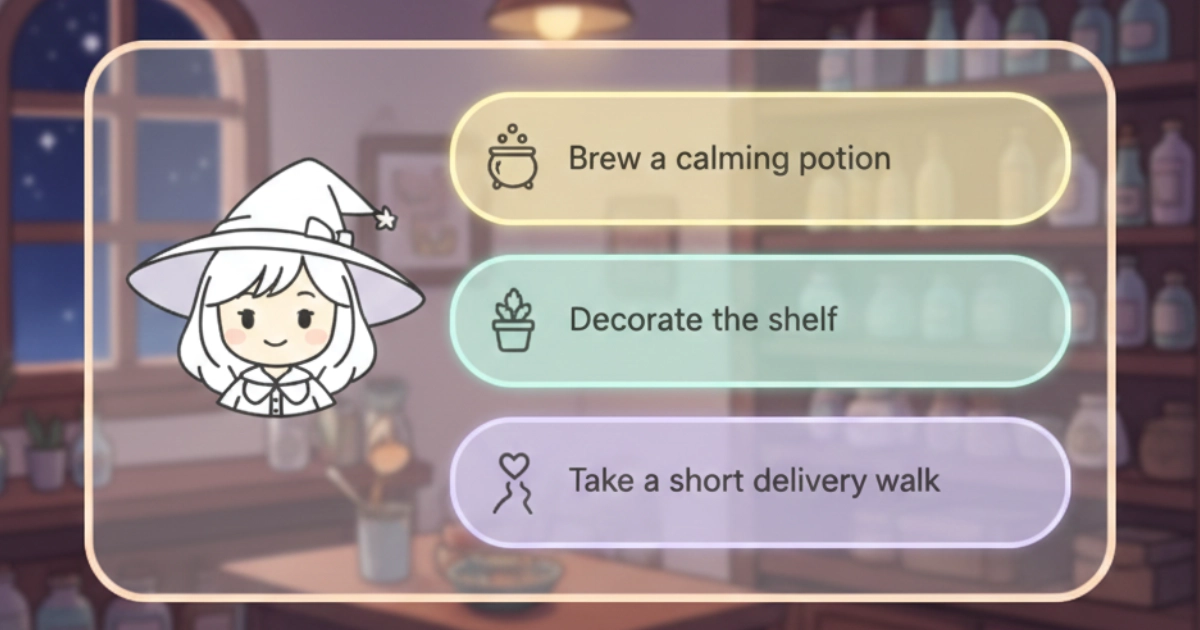
Calm often grows when you can choose your next small step.
4) Ritual matters more than technique
Relaxation apps often focus on a single channel, such as breath or sound. Cozy games combine multiple calming cues at once: soft colors, rounded shapes, gentle soundscapes, slow motion, and kind responses.
When these elements repeat, they form a ritual. Over time, simply opening the game can signal safety, much like an evening tea or a familiar song.
Visual softness plays an important role here, but it works best when paired with repetition and meaning. Small, gentle actions done again and again turn interaction into habit. If you want to explore this idea more deeply, you may enjoy The Psychology of Soft Tasks: Why Small Rituals Calm the Mind.
For a broader perspective on digital wellbeing, you can also explore an external digital wellbeing resource or authoritative health guidance on stress and relaxation.
5) Choosing between a calming app and a cozy game
Both tools can be valuable. The best choice depends on what your mind needs in that moment.
If you feel highly overstimulated, a simple app may be the gentlest entry point. If your thoughts feel stuck or restless, a cozy game can guide attention more naturally through soft focus.
A helpful rule of thumb: choose an app when your body needs to slow down, and choose a cozy game when your thoughts need somewhere kind to land.
- Prefer low-stakes play: nothing urgent, nothing punishing.
- Keep sessions short: even 10–25 minutes can be enough.
- Look for predictable rhythms: familiar tasks and steady feedback.
- Use gentle audio: soundscapes that soothe rather than excite.
- Stop on a cozy moment: after a small success or tidy action.
- Notice how you feel after: calmer or more wired, and adjust next time.
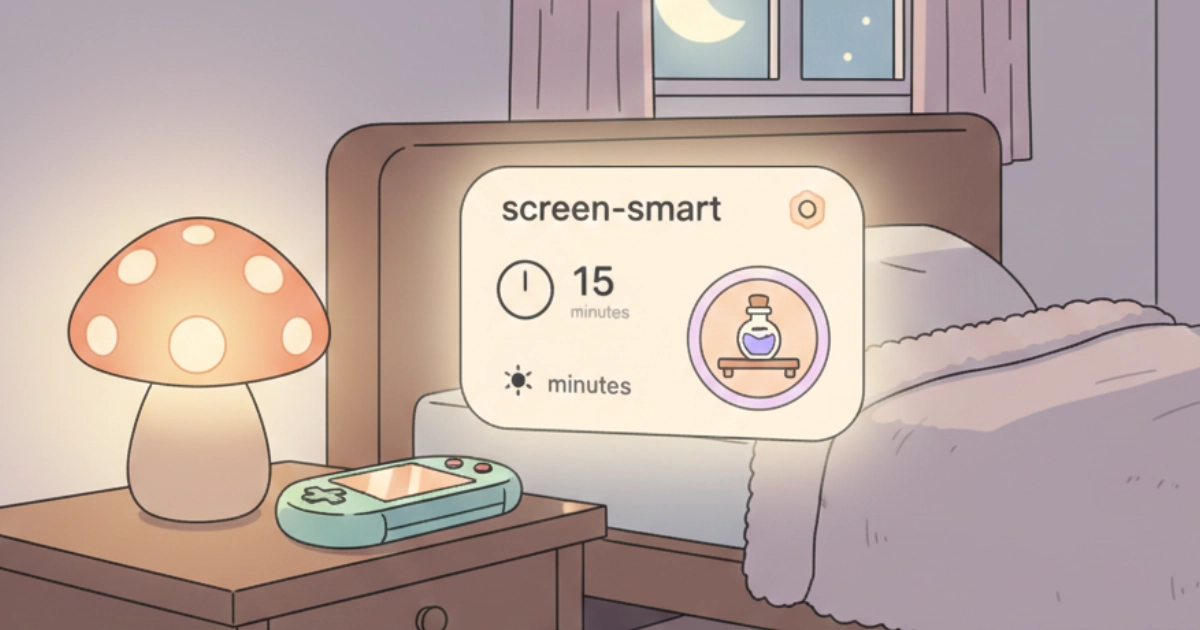
A short session can be a bridge into rest, not a trap.
Final Thoughts
Relaxing apps can reduce stimulation. Cozy games often go further by offering gentle focus, visible agency, and comforting rituals that help the mind feel safe and steady.
If you are looking for a wellbeing habit that feels enjoyable rather than effortful, cozy games wellness may be the better fit.
If Potion Game’s calm alchemy loop sounds like your kind of digital ritual, you can join the waitlist and step into a softer, more supportive kind of progress.
Want to be part of a new cozy alchemy adventure?
Join the Potion Game waitlist 💛