1) Why the brain has trouble switching off at night
The brain does not shut down on command. It follows rhythms.
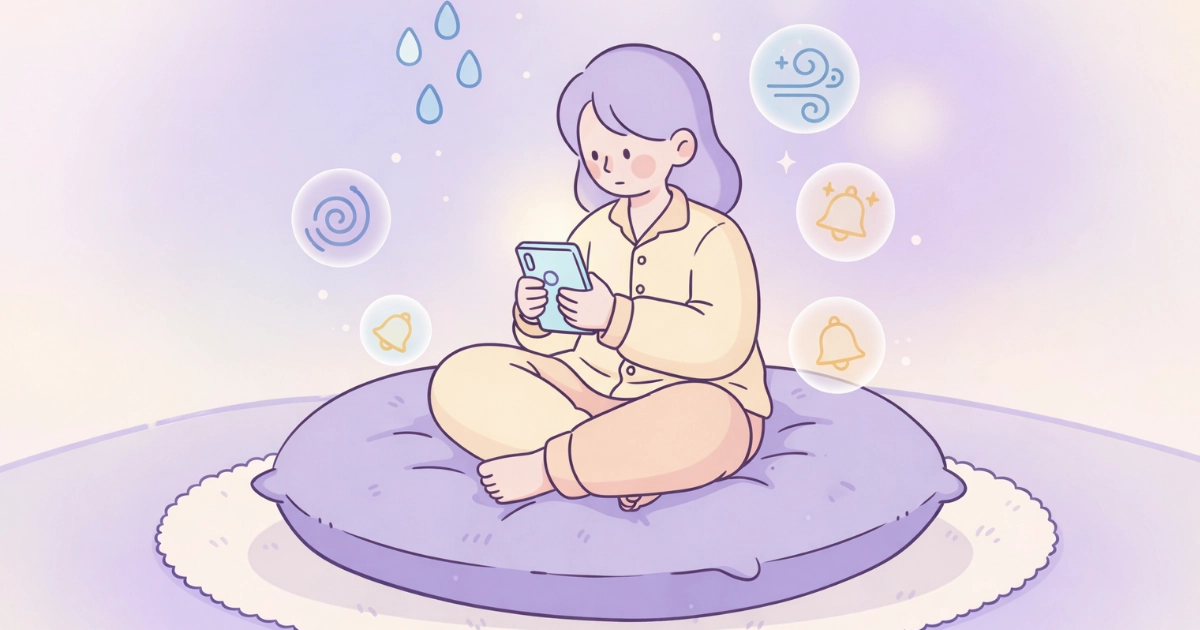
After hours of messages, decisions, and stimulation, the mind can remain in a “ready” state even when the day is technically over. Thoughts loop. Attention stays alert.
What helps most is a transition. A small, predictable activity gently tells the brain that effort is no longer required. This is where cozy games fit naturally, offering structure without pressure.
Table of Contents
- 1) Why the brain has trouble switching off at night
- 2) Cozy Games Sleep Works Because They Lower Mental Load
- 3) The “Safe Space” Effect: Predictability Calms the Nervous System
- 4) Screen-Smart Cozy Play: How to Avoid the “Too Awake” Trap
- 5) Build Your Own Cozy Games Sleep Ritual in 3 Gentle Steps
- Final Thoughts
2) Cozy Games Sleep Works Because They Lower Mental Load
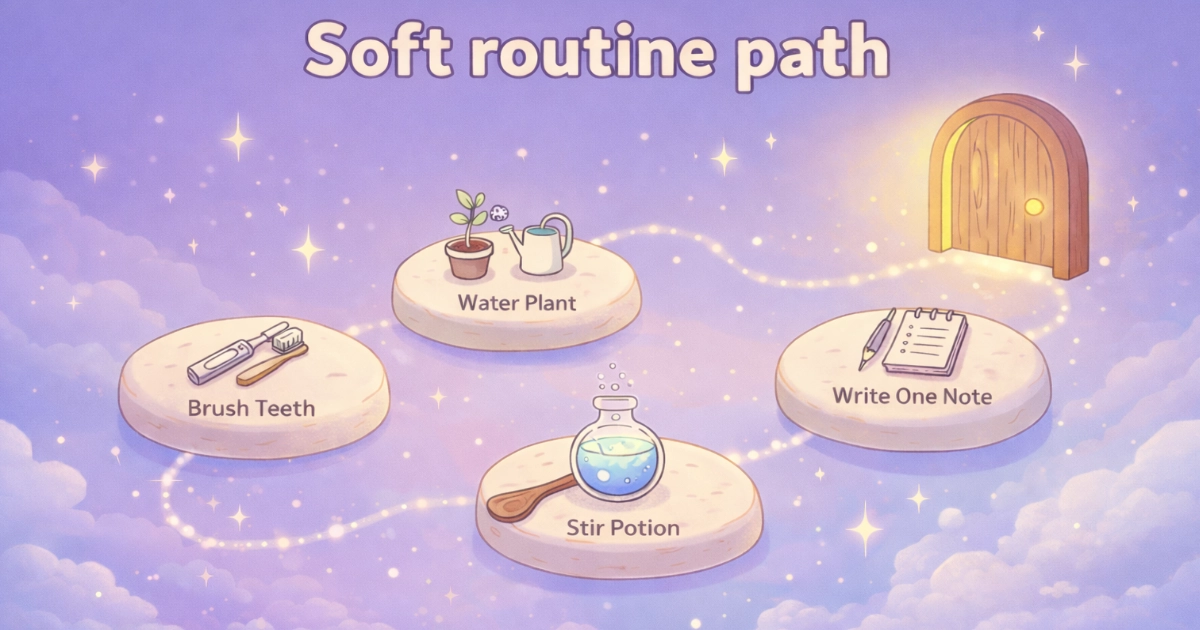
Many cozy games use simple tasks: watering plants, organizing shelves, crafting small items, or helping friendly characters. These actions are easy to understand, and they rarely punish you for mistakes. That matters, because high mental load keeps the brain alert.
When a game is gentle, your attention can soften. You stop scanning for threats, timers, or perfect performance. Instead, you settle into “good enough,” which is the emotional tone most people need before sleep.
For a deeper look at why small rituals feel calming, you can read our article on soft tasks and the mind. It connects the same idea to everyday stress recovery.

Small steps can feel like a lullaby for attention.
3) The “Safe Space” Effect: Predictability Calms the Nervous System
At night, the mind often replays unfinished thoughts. Predictability helps interrupt that loop. Cozy games usually repeat friendly patterns: familiar places, consistent rewards, and slow progress that does not demand perfection.
That predictability can create a felt sense of safety. In simple terms, your body learns what to expect, and it relaxes. A calm game becomes a small container for your attention, keeping it from scattering into worries.
If you want to explore this idea more, read our guide on predictability and soft routines. It explains why the brain loves gentle structure.

Familiar places help the mind feel held.
4) Screen-Smart Cozy Play: How to Avoid the “Too Awake” Trap
Not every game is good before bed, and not every way of playing is restful. Bright light, fast rewards, or endless scrolling can make you feel more wired, not more calm.
The goal is not to replace sleep with play. The goal is to use a short, gentle session as a bridge into rest. Here are a few screen-smart guidelines that keep cozy play sleep-friendly:
- Keep it short: aim for 10–25 minutes, then stop on purpose.
- Choose low-stakes gameplay: no ranked modes, no high-pressure timers.
- Lower brightness: reduce screen brightness and use night mode if you like.
- Avoid “one more thing” loops: stop after a small task or a calm checkpoint.
- Use soft audio: gentle soundscapes over intense music or loud effects.
- End with a wind-down cue: a final sip of water, a stretch, or a slow breath.
For general sleep hygiene guidance, you can review an authoritative sleep resource such as a public health or sleep research organization. For digital wellbeing and screen habits, an external psychology resource can also help you shape a healthier evening routine.
5) Build Your Own Cozy Games Sleep Ritual in 3 Gentle Steps
Think of this as a bedtime “landing sequence.” It should feel easy, repeatable, and kind. You do not need a perfect routine. You need a routine that your brain recognizes.
Step 1: Pick one cozy game that feels safe.
Choose a game where you can do calm tasks: decorating, crafting, tending plants, light story moments. Avoid games that make you chase performance or speed.
Step 2: Set a soft boundary.
A timer can help, but make it gentle. Your boundary could be “one day cycle,” “one delivery,” or “one chapter.” The point is to end feeling settled, not hungry for more.
Step 3: Close with a quiet cue.
When you finish playing, do a tiny closing action: dim the lights, put the phone away, or read one page of something calm. This trains your body to associate cozy play with sleep readiness.
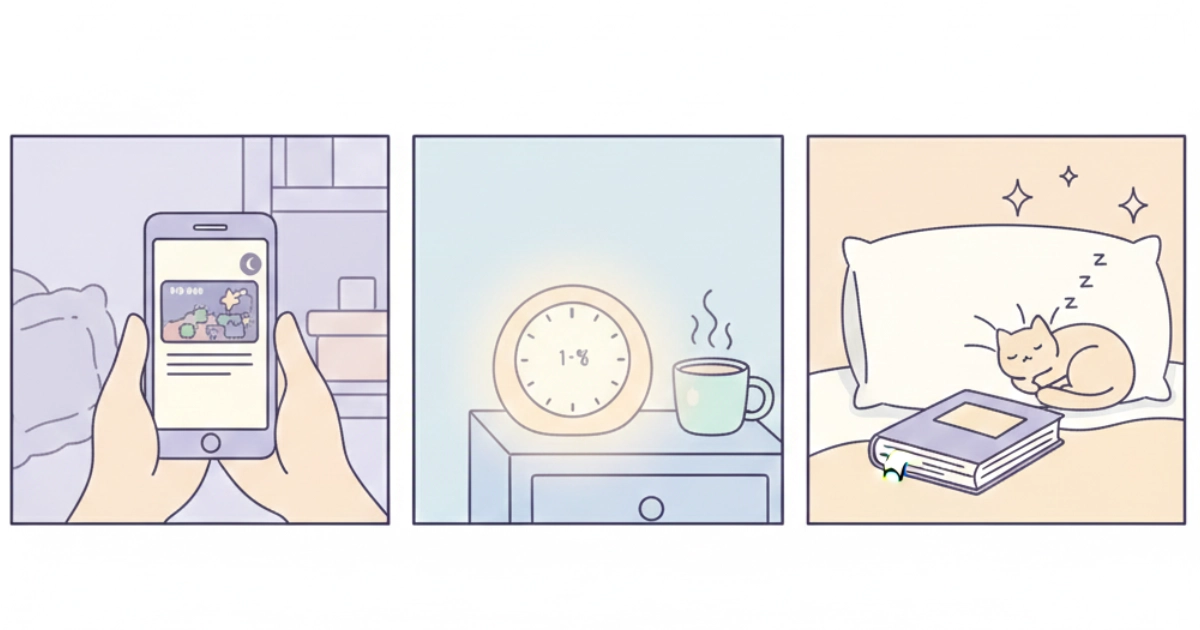
A small sequence can guide the mind into rest.
Final Thoughts
Cozy games are not a magic sleep button, but they can be a helpful bridge. When the experience is soft, predictable, and low-pressure, it can reduce mental noise and help your attention settle into something quieter.
If you love calm evenings and gentle crafting, Potion Game is being designed with that same feeling in mind: soft tasks, warm visuals, and a friendly pace. If you want to be part of the journey, join the waitlist and get updates as the cozy world grows.
Want to be part of a new cozy alchemy adventure?
Join the Potion Game waitlist 💛