Cozy games reduce stress more effectively than many people imagine — and today, science can finally explain why. Recent studies in psychology, neuroscience and digital wellbeing show that gentle, low-pressure games help the mind recover from tension, regulate emotions, and restore mental clarity.
This article explores the scientific foundations behind why cozy games reduce stress, using verified research and peer-reviewed sources.
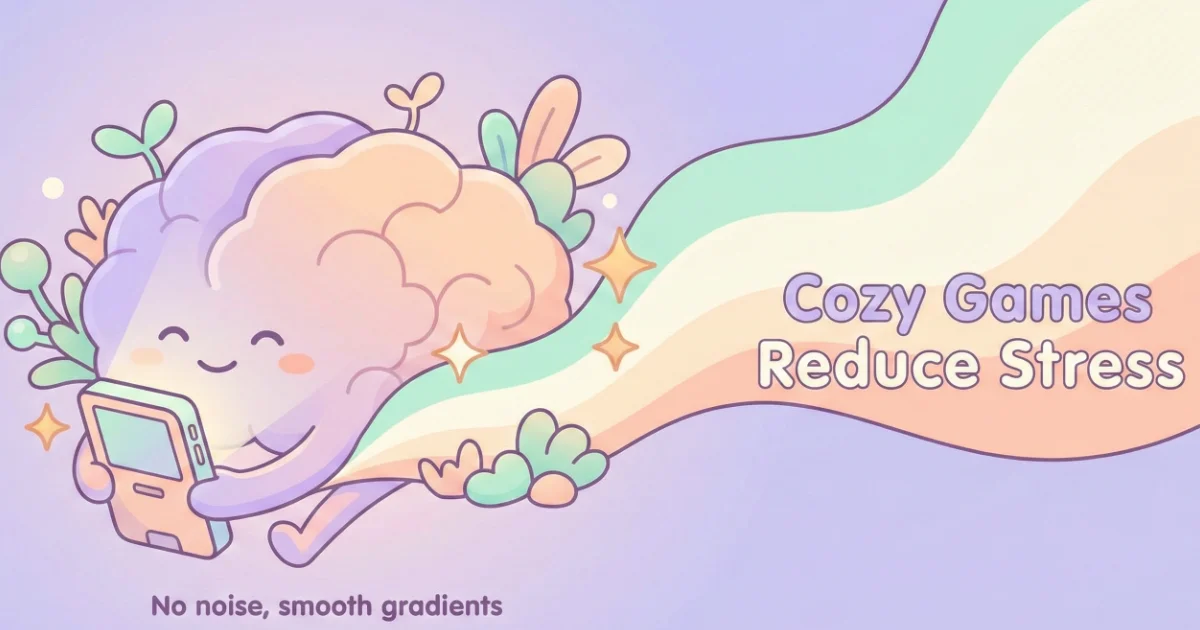
How cozy games reduce stress, illustrated in a soft and calming way.
Table Of Content
- 1. How Cozy Games Reduce Stress: The Scientific Basis
- 2. Cozy Games Reduce Stress by Improving Emotional Regulation
- 3. Pastel Colors and Soft Shapes Play a Key Role in Stress Reduction
- 4. Flow Theory Explains Why Cozy Games Reduce Stress
- 5. Cozy Worlds Support Digital Wellbeing and Mental Recovery
- Final Thoughts
1. How Cozy Games Reduce Stress: The Scientific Basis
The idea that cozy games reduce stress is not just a trend — it is supported by measurable psychological and physiological evidence. Multiple peer-reviewed studies show that casual, low-intensity games can:
- lower heart rate and blood pressure
- reduce cortisol (stress hormone)
- improve mood stability
- promote emotional regulation
A notable study by Reyes et al. (2021) demonstrated that nature-themed casual games significantly decreased psychological stress and physiological arousal in university students. Similar results appear in Chumbley & Griffiths (2019), confirming the relaxing effect of slow gameplay.
For readers who want a broader introduction to cozy gaming, you can explore our main guide:
Why Cozy Games Are So Popular.
2. Cozy Games Reduce Stress by Improving Emotional Regulation
Another strong reason why cozy games reduce stress is their ability to help players regulate emotions. Studies show that light, low-pressure gameplay has a measurable impact on emotional recovery.
For example, a study by Barr & Copeland (2020) found that casual games improved mood and reduced anxiety during negative emotional states. Meanwhile, Russoniello et al. (2013–2014) demonstrated significant reductions in depression and anxiety symptoms after regular short gameplay sessions.
This emotional benefit comes from predictable feedback, no punishments, and no performance pressure — conditions that mirror mindfulness micro-breaks.

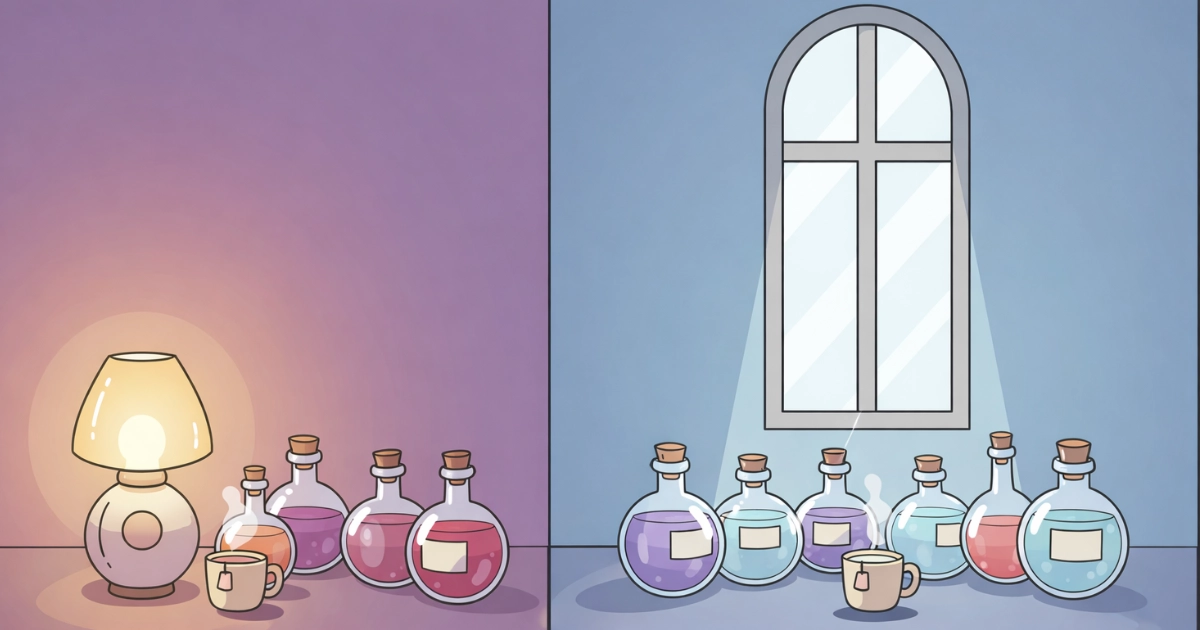
A calm cozy workspace illustrating emotional benefits of gentle gaming.
3. Pastel Colors and Soft Shapes Play a Key Role in Stress Reduction
Visual design is one of the core reasons why cozy games reduce stress. Research in affective psychology and color theory shows that pastel colors, warm lighting and rounded shapes have a measurable calming effect on the brain.
Scientific evidence includes:
- Afifi & Rahnema (2024) — pastel and low-saturation hues reduce negative affect.
- Ji et al. (2024) — pastel-colored game environments evoke comfort and emotional warmth.
- Bar & Neta (2007) — rounded shapes reduce amygdala activation (the brain’s threat detector).
In simpler terms: the aesthetics are not accidental. They are scientifically suitable for relaxation.
For comparison, see this external reference about color psychology:
Color Psychology – Verywell Mind.

Pastel colors play a key role in stress reduction inside cozy games.
4. Flow Theory Explains Why Cozy Games Reduce Stress
A core reason why cozy games reduce stress is their ability to create a gentle form of “flow” — a mental state where attention becomes calm, focused, and lightly absorbed.
Classic Flow Theory by Mihály Csíkszentmihályi explains that:
- tasks must be clear
- difficulty must be low or moderate
- feedback must be soft
Cozy games fit perfectly:
- watering plants
- organizing items
- decorating a room
- mixing ingredients
These micro-routines generate calm, predictable rewards that reduce mental overload.

How cozy games create gentle flow states.
5. Cozy Worlds Support Digital Wellbeing and Mental Recovery
The last scientific reason why cozy games reduce stress comes from digital wellbeing research. Calm, low-noise digital environments help the brain recover from overstimulation — especially in stressful daily routines.
Several studies confirm this:
- Pizzoli et al. (2024) — calm audio, natural scenery and gentle interactivity increase relaxation.
- Verstegen et al. (2025) — soft soundscapes and customizable environments improve digital rest.
- Mental health app studies (Hall 2019; Lukas 2025) — brief, relaxing digital moments improve emotional balance.
This explains why cozy games are often used as “digital breaks” before sleep, after work, or during anxious moments.
For additional context on stress relief and mental wellbeing, you can explore this resource from Harvard Health:
Harvard Health – Stress Relief & Relaxation.
Final Thoughts
Scientific research gives us a clear picture: cozy games reduce stress through a combination of soothing aesthetics, predictable routines, low cognitive load, emotional regulation and gentle flow states. They are not simple entertainment — they are digital environments designed around human wellbeing.
For readers interested in a wider introduction, explore our main article: Why Cozy Games Are So Popular
Want to be part of a new cozy alchemy adventure?
Join the Potion Game waitlist 💛