In cozy games, “soft” visuals often feel like a deep exhale. Rounded corners, circular icons, gentle silhouettes, and pill-shaped buttons seem to lower mental friction almost instantly. This is not just a passing style choice. Rounded shapes psychology helps explain why curves often feel emotionally safe, especially for visually sensitive players.
Your brain reads shape faster than it reads detail. Before color palettes or textures register, your visual system performs a quick scan for comfort versus threat. In that first glance, curved forms tend to signal “safe to approach,” while sharp angles can feel more alerting.
In Potion Game, softness is treated as a form of care, not decoration. When you are crafting, stirring, watering, or reading letters, the environment should support digital calm. Rounded forms help create a space that feels kind to the eyes and kind to the nervous system.
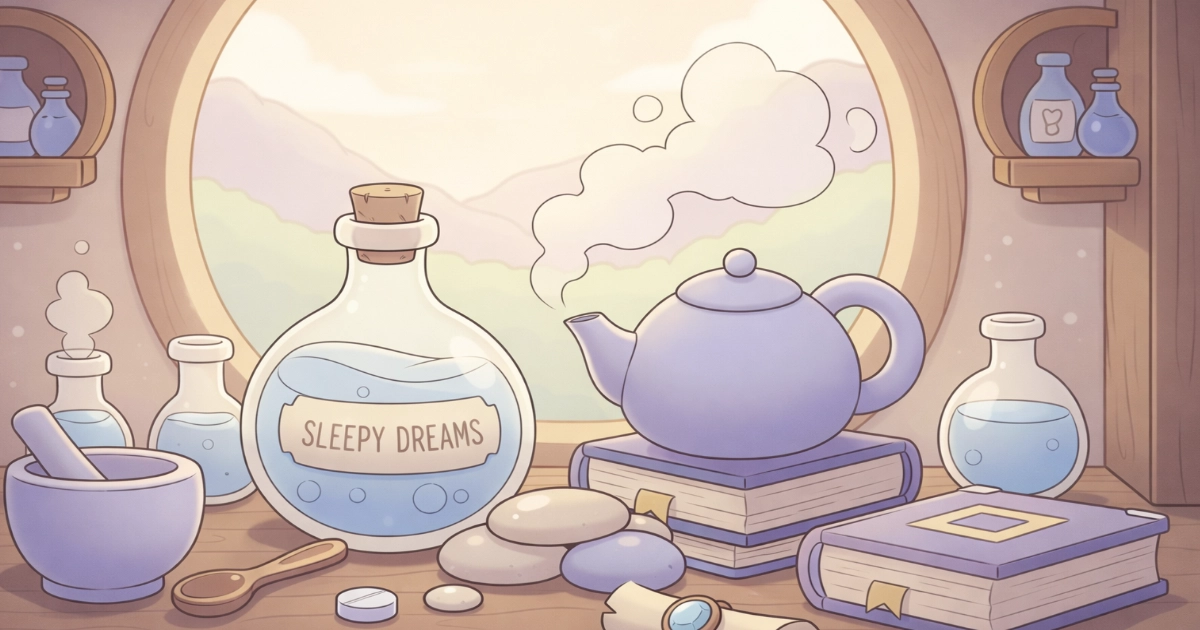
Rounded tools and bottles make a crafting space feel gentle and approachable.
Table of Contents
1) Why the brain reacts to shape before anything else
Visual perception is built for speed. Within a fraction of a second, the brain asks two quiet questions: “What is this?” and “Is it safe?” Shapes are simple signals that can be decoded quickly, even before details become clear.
This is why shape language matters so much in relaxing games. When overall silhouettes are soft, attention can settle more easily. When silhouettes are full of spikes or harsh corners, attention may stay subtly “on guard,” even if no danger is present.
2) Rounded shapes psychology and threat perception
From an intuitive, human perspective, sharp points resemble things that can harm: thorns, teeth, claws, broken edges. Angular forms naturally draw faster attention because they hint at potential danger.
Curves, by contrast, feel less likely to cut, pierce, or attack. Research on basic geometric cues supports this distinction: sharp configurations tend to capture attention quickly, while curvilinear forms are often preferred and experienced as more pleasant.
This does not mean angles are “wrong.” Angular shapes can feel strong, serious, or technical. But when the goal is emotional safety, softness, or cozy games for stress relief, curves provide a reassuring foundation.
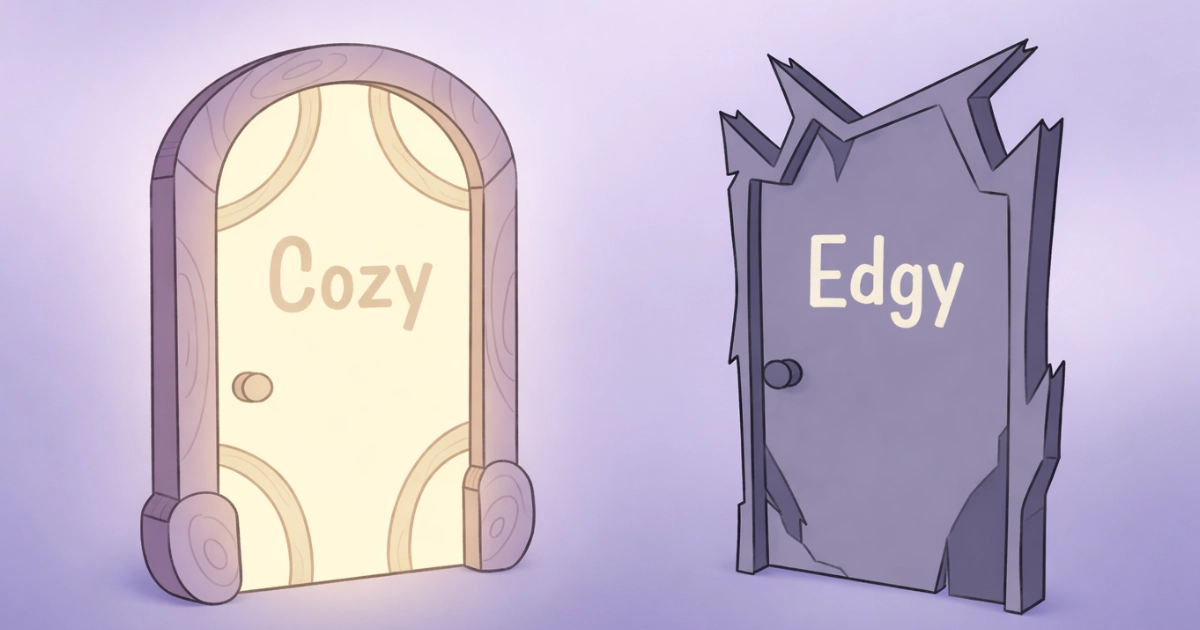
A small change in contour can shift the feeling from calm to alert.
3) Curves invite approach: “I can get closer”
Feeling safe is not only about avoiding fear. It is also about feeling invited.
In cozy experiences, you want players to lean in: tap the button, open the book, stir the potion, read the letter, and stay a little longer. Rounded shapes quietly support that invitation.
Studies in aesthetics and spatial perception suggest curvilinear spaces are more often judged as beautiful and are linked to approach-oriented choices. The same feeling carries into digital spaces: curves gently suggest closeness, while hard edges can imply distance.
For visually sensitive players, this sense of approach matters. When everything looks friendly and rounded, the experience feels less demanding and more like a safe place than a challenge.
Rounded elements reduce visual sharpness and feel more welcoming to interact with.
4) Soft visuals and tired eyes
When you are stressed or overstimulated, even small visual friction can feel heavier than usual. Soft visuals reduce that friction by keeping edges smooth, spacing generous, and forms predictable.
Curved, simple silhouettes are often easier to scan at a glance, especially on small screens. This supports calm experiences where the player never feels visually punished for looking around.
This is why Potion Game leans into rounded bottles, circular ingredient bowls, and gentle icons. It is a visual promise: nothing here will poke or rush you. Everything is meant to guide quietly.
5) When rounded shapes create emotional safety
Softness works best when it feels consistent. When curves appear across tools, icons, characters, and spaces, the experience feels cohesive and emotionally reliable.
Instead of drawing attention to themselves, rounded shapes fade into a reassuring background presence. They support comfort without demanding focus, helping the whole world feel calmer and easier to inhabit.
If you are curious about the broader research behind curvature preference, this open-access review offers a strong overview: Preference for Curvature (open-access review).
For additional context on how sharp cues can capture attention as threat-like, this paper is also useful: The Shape of Threat (PubMed).
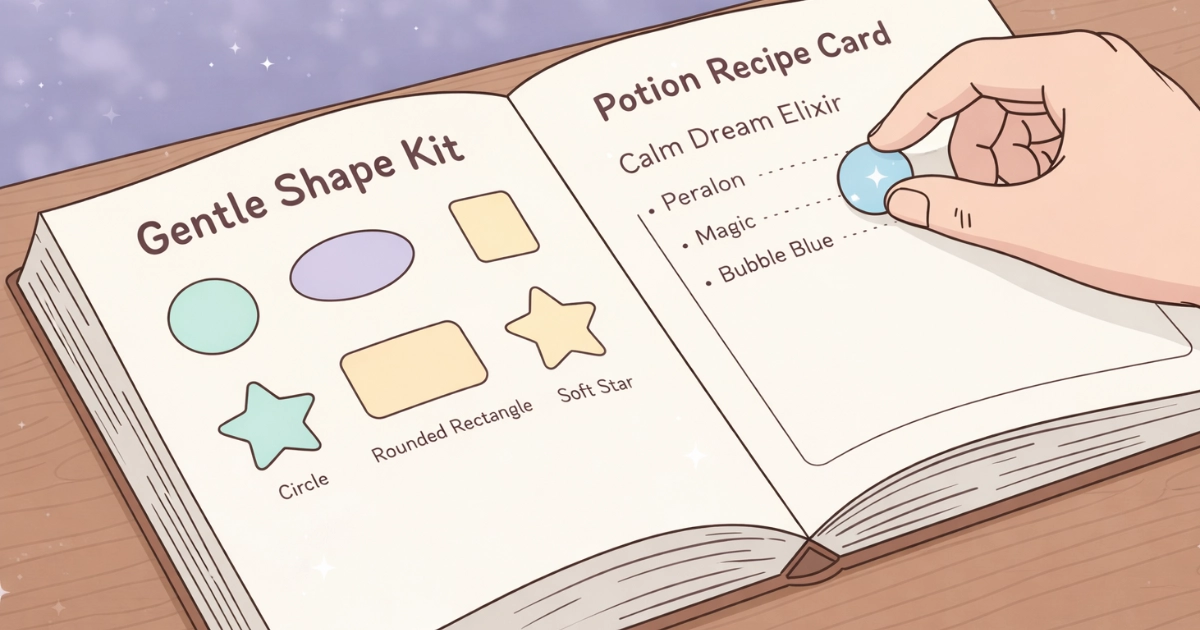
A small family of curves can shape an entire cozy visual identity.
Final Thoughts
Rounded shapes feel safe because they communicate low threat and easy approach at a glance. In a world that already feels sharp and demanding, that first impression matters.
Curves help attention settle. They make digital spaces feel more forgiving, especially for players carrying stress from outside the screen.
If you enjoy this kind of gentle design science, you may also like How Cozy Games Influence the Nervous System (Simple Science) and How Gentle Soundscapes Reduce Anxiety in Cozy Games. And if Potion Game sounds like your kind of soft ritual, join the waitlist to follow our progress.
Want to be part of a new cozy alchemy adventure?
Join the Potion Game waitlist 💛